Why Automated Ranking Tools Give You the Wrong Map Data
The digital simulation of proximity versus physical reality
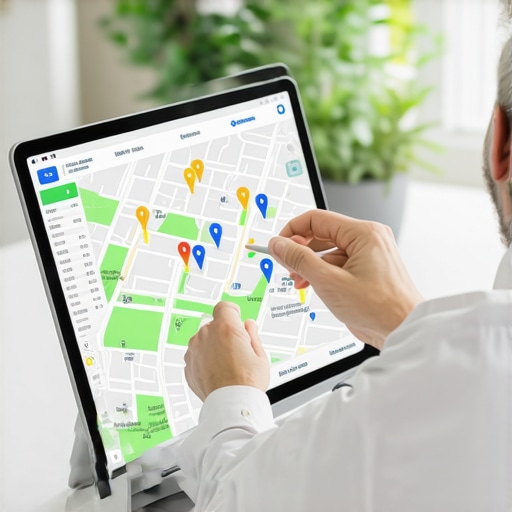
Automated local SEO software displays false ranking positions because API calls scrape data from centralized cloud servers rather than replicating real user coordinates on physical streets. In the spatial database of modern search engines, a ranking coordinate is a highly fluid point influenced by ambient mobile phone signals, local physical terrain, Wi-Fi router MAC addresses, and true real-time GPS locations. Automated tools try to replicate this using fixed geolocations, but they miss the behavioral signals and physical anomalies that define actual map visibility.
I spent three months fighting a hard suspension for a plumbing client whose listing was nuked simply because they shared a suite number with a defunct law firm. Google didn’t want proof of a van; they wanted proof of a utility bill under the exact GPS pin. When we looked at their automated tracking tools, everything showed green. The software claimed they were ranking first across twenty square miles. But on the ground, standing right on the curb in front of their office, they were completely invisible. This was my wake-up call. The map tools we buy to run our agencies are lying to us. They measure a clean, mathematical simulation of search, while Google maps the messy, real world of physical humans moving through actual neighborhoods.
“Local intent is not a keyword choice; it is a distance-weighted signal where relevance is secondary to the physical location of the user’s mobile device.” – Map Search Fundamentals
The ghost in the GPS coordinates
Standard rank trackers fail because they execute search queries through static desktop emulation instead of factoring in dynamic real-time triangulation variables. True local relevance is built on the interaction between a moving receiver and a fixed business centroid. When an automated tool queries the search engine, it utilizes a static location parameter in the URL. This does not trigger the same proximity calculations as a mobile phone sending cellular triangulation data and moving GPS vectors back to the server. You are viewing a sterile, cached environment that bears no resemblance to what a real customer sees while walking down the boulevard.
The discrepancy is particularly brutal when businesses attempt to evaluate their performance using generic metrics. If you rely on automated programs, you will miss localized algorithmic shifts. You might believe your optimization is flawless while your actual phone calls are cratering. This disconnect is why your low map rank is a data problem not a review problem, requiring you to look deeper than simple reviews or star counts. The software reports a perfect score because it queries from an ideal, uncontaminated server IP address, completely ignoring the localized filter blocks that suppress your real listing.
The physical world is filled with obstacles that automated grid trackers cannot calculate. For example, large concrete structures, city parks, and municipal boundaries create invisible walls in the proximity algorithm. A business might rank exceptionally well on one side of a highway but completely vanish on the other because user behavior patterns change at that physical barrier. Traditional software cannot see these behavioral shifts; it only sees a theoretical radius of search. It treats the city as a flat, empty plane instead of a dynamic organism.
The local authority reading list
- Learn how to spot and fix structural database errors; how to spot citation inconsistency before google does without relying on automatic checkers.
- Understand the structural differences in tracking systems; discover why your current local seo software misses critical ranking blocks that keep your business hidden.
- Examine the tools used by industry specialists; review the toolkits local pros use to monitor their map pack positions with high-fidelity grid maps.
- Explore the truth behind software marketing claims; read downloadable ranking tools what actually works vs marketing hype to save your budget.
- Recover your positions after moving locations; implement fixing your ranking after shifting from a shopfront to a service area model to keep your local momentum.
Why your physical address is a liability in algorithmic filters
A fixed business location becomes a competitive hazard when automated systems mask the overlapping proximity filters applied by local search algorithms. Google constantly suppresses duplicate listings and highly clustered service providers in the same immediate area to keep the search experience diverse. If your business resides in a commercial complex with three other businesses in the same primary category, the algorithm will filter out the weaker listings. Your software will report that you are ranking perfectly because it queries your business name directly, but actual customers searching for broad terms will only see your competitor.
This spatial filter, often called the centroid filter, is highly aggressive. If you do not actively analyze your physical neighbors, you will build optimization campaigns for keywords you can never win. This is why many business owners find why your map ranking doesn’t match the physical proximity of their storefronts. The software suggests you need more backlinks or reviews, but the real blocker is a physical proximity filter caused by a competitor operating three doors down the hall.
To bypass this, you must analyze the local grid manually. You must walk the streets or use precision coordinate spoofing to see exactly where your competitors drop off the map. This reveals the actual boundary of your proximity bubble. If you find your business is being filtered out, you may need to adjust your primary category or focus on secondary service keywords that your immediate neighbors do not target. This manual strategy is far more effective than pouring money into generic citation packages that only reinforce the duplicate data points.
The three mile radius that determines your revenue
The geographic boundaries of your actual customer acquisitions are strictly governed by localized mobile density and real-time transit patterns. A business operating in a dense metropolitan area might have a true organic reach of only five city blocks, while a business in a rural county can easily pull customers from thirty miles away. Automated ranking software usually applies a uniform grid across both environments, creating useless reports. A twenty-mile tracking grid over downtown Chicago is a waste of resources; a five-hundred-foot grid is what you actually need to see real trends.
When you look at automated reports, you see a broad overview that suggests steady performance. But when you inspect the microscopic data, you discover your visibility disappears during peak commute hours. This occurs because Google shifts its search results based on real-time transit data and mobile density. You can read about why your map position changes based on the time of day to understand how search results adapt to human movement. If your rank tracker only runs its audits at midnight, you are looking at data from an empty city.
Furthermore, consumer behavior changes during those peak hours. A user searching for a quick lunch option while stuck in slow traffic will see completely different results than a user sitting in an office building. The search engine places extreme weight on real-time travel times, adjusting the map pack dynamically. If your optimization strategy does not account for these temporal shifts, your marketing is built on a mirage. You must optimize for the real-world conditions under which your customers are actually searching.
“Proximity is a highly volatile metric that cannot be simplified into static ranking reports; it must be monitored as a living reflection of physical human movement.” – Spatial Search Analytics
The clean up of legacy database pollution
Old citation campaigns and automated directory blasts leave a trail of inconsistent data that permanently damages your local entity authority. Years of using cheap, automated systems to submit your business information to hundreds of low-tier directory sites creates a chaotic web of conflicting addresses, dead phone numbers, and mixed categories. Google crawls these old records, detects the inconsistencies, and lowers your overall trust score because it cannot verify your actual physical footprint.
Cleaning this mess requires meticulous manual labor. Cheap software tools claim they can overwrite these old listings instantly, but they only place a temporary API mask over the data. The moment you stop paying the software subscription, the old, corrupt data reappears. This is why manual citation building beats automated spam every time; it permanently corrects the root sources of the data rather than putting a band-aid over the symptoms.
To truly recover, you must hunt down every historic variation of your business name, address, and phone number. Start with major data aggregators that feed the entire ecosystem. If they have the wrong street suffix or an old suite number, every directory downstream will continue to publish those errors. Correcting these core profiles establishes a solid foundation, allowing the search engines to trust your business location once again. This trust is what ultimately allows your map pin to expand its reach beyond your immediate block.
The tactical approach to recovering from local ranking drops
Restoring lost local visibility requires a precise forensic audit of your entity data, category selections, and local backlink patterns rather than generic content creation. When a business suddenly drops out of the map pack, the temptation is to start buying more reviews or writing blog posts. But local drops are almost always caused by structural data changes or filter updates. If you recently changed your primary category or updated your service area, you likely triggered an algorithmic verification loop that is holding your listing in limbo.
You must systematically evaluate every change made to your profile and your website. If your website has crawl issues, your local map ranking will suffer. This link between your site and your map profile is highly sensitive; a single broken page can destroy your maps authority. You can find detailed instructions on fixing the 404 errors that are sabotaging your local website authority to ensure your foundation is solid. Once the structural site issues are cleared, you can focus on resolving any conflicts on your Google Business Profile itself.
If your drop was caused by moving your physical shop, the recovery process requires patient data rebuilding. The search engine must slowly re-associate your brand entity with the new physical coordinates. During this transition, you must update your website schema, local directory listings, and landing pages to reflect the new address precisely. If you leave even a few major citations pointing to your old location, the algorithm will become confused, split your authority, and suppress your listing for both areas.
Finally, always keep a close eye on the actions of your competitors. If your data is clean but you are still losing ground, your competitors may be using aggressive tactics to push you out of the market. They might be utilizing fake reviews, keyword-stuffed names, or virtual offices to expand their proximity bubbles illegally. Identifying these issues early allows you to file redressal forms and clean up your local market, ensuring that only legitimate, physical businesses are allowed to compete for valuable map pack real estate.