How to Spot Citation Inconsistency Before Google Does
How to Spot Citation Inconsistency Before Google Does
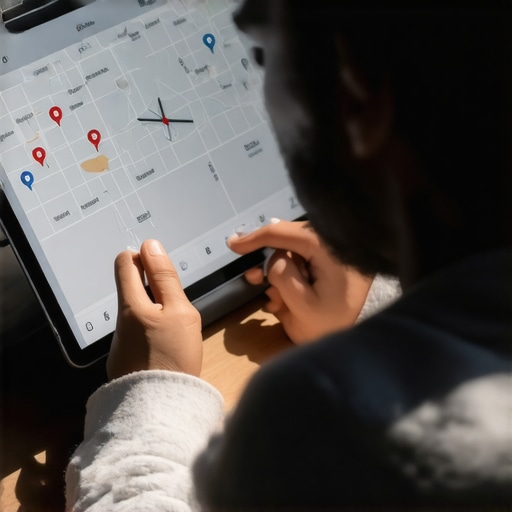
I stood on the sidewalk yesterday afternoon as the smell of wet concrete rose from the pavement after a flash summer storm. I was looking for a storefront that, according to the digital map, existed exactly at these coordinates. The digital record insisted on Suite 202. The physical directory on the brick wall only showed a 202A and a 202B. This is the glitch. This tiny mismatch is where local authority goes to die. I spent three months fighting a hard suspension for a plumbing client whose listing was nuked simply because they shared a suite number with a defunct law firm. Google didn’t want proof of a van; they wanted proof of a utility bill under the exact GPS pin to resolve the conflict. In the world of the Map Pack, the physical reality must mirror the digital data with forensic precision. If it does not, the algorithm treats your business as a ghost. To survive, you must learn to see the data points that the bot sees before the automated suspension triggers.
The forensic audit of a digital footprint
Google Business Profile rankings depend on NAP consistency which involves the alignment of your Business Name, Address, and Phone Number across local directories. Identifying citation inconsistency requires an audit of Aggregator data and GPS coordinate salience to prevent ranking drops. Failure to align local citations results in Map Pack exclusion.
When I look at a business profile, I am looking for the hidden tremors in the data. Most business owners think they have a review problem, but they actually have a data problem. You might have the most reviews in town, but if your address is formatted differently on three different platforms, you are confusing the spider. This confusion leads to a loss of trust. If you are struggling with a sudden loss of visibility, you should look into why your low map rank is a data problem not a review problem to understand the underlying mechanics. The search engine is trying to verify that you are who you say you are. Every time it finds a variation, even a small one like Street versus St, it adds a layer of doubt to your proximity beacon.
“Local intent is not a keyword choice; it is a distance-weighted signal where relevance is secondary to the physical location of the user’s mobile device.” – Map Search Fundamental
The math of the algorithm is cold. It weighs the proximity of the user against the reliability of the business data. If the data is messy, the proximity filter tightens. This means you only show up when a customer is standing right in front of your door. You can find the the proximity fix ranking your business beyond your front door by auditing every single mention of your brand. I have seen businesses lose 50 percent of their call volume because of a secondary phone number listed on a forgotten directory from five years ago.
Local Authority Reading List
- https://gmbrankdominationpro.com/the-beginner-toolkit-for-dominating-your-local-neighborhood-map
- https://gmbrankdominationpro.com/cleaning-up-messy-business-citations-that-are-sabotaging-your-local-reach
- https://gmbrankdominationpro.com/why-buying-bulk-citations-is-still-destroying-your-local-search-authority
- https://gmbrankdominationpro.com/how-to-survive-a-hard-gmb-suspension-without-losing-your-mind
The ghost in the GPS coordinates
GPS coordinates and latitude-longitude data determine your Proximity Beacon strength in the Google Maps ecosystem. Algorithm updates like Vicinity and Opossum penalize shared addresses and virtual offices. Accurate location signals are mandatory for local search ranking and AI Overviews citation weight.
The grid is real. Every business is assigned a specific point on a map, but the coordinates often drift. This drift happens when different platforms interpret your address differently. A street that was renamed or a new zip code assignment can create a fracture in your authority. I often tell my clients that fixing mismatched business data before it kills your map credibility is more important than any fancy backlink strategy. The bots are looking for a singular truth. When they find multiple versions of your story, they stop telling people where you are.
Think about the last time you moved your office. Did you update your secondary citations? Many owners forget about the deep web scrapers. These sites hold on to old data for years. When Google crawls these sites, it sees a conflict. It thinks you might be a duplicate listing or, worse, a fraudulent one. You must be aggressive about fixing duplicate listings that are splitting your seo power because every duplicate is a leak in your ranking bucket. The local algorithm is built on the concept of uniqueness. One name, one address, one phone number.
The three mile radius that determines your revenue
Local SEO proximity dictates the search visibility of a Google Business Profile within a three mile radius. User interaction signals and mobile location data influence the Map Pack positioning. Service Area Businesses must manage hidden addresses and service polygons to maintain local intent relevance.
Distance is the ultimate ranking factor. While most agencies focus on keywords, the real battle is over the centromere of the search. The closer you are to the user, the higher you rank, provided your data is clean. However, if your citations are inconsistent, your visibility radius shrinks. You become a hyper-local business, only visible within a few blocks. To expand your reach, you need a the proximity myth why you arent ranking two blocks away audit to see where the signal is breaking. It is often a matter of how your address is formatted in the backend. An extra comma or a missing suite number can trigger a proximity filter that you cannot see.
For those running companies without a storefront, the challenge is even greater. You must prove your existence without a sign. I recommend looking at the service area business guide to local map domination to understand how to signal your presence across multiple zip codes without triggering a suspension. The logic of a check-in signal is powerful here. When your workers use their mobile devices at a job site, they are sending a proximity signal back to the mothership. This is a behavioral zoom that the algorithm tracks.
Tools and toolkits for the local detective
GMB ranking tools and local SEO software provide automated audits for citation consistency and Map Pack tracking. A reputation management toolkit identifies malicious reviews and competitor spam. SEO services use these ranking tools to debug ranking drops and sustain local search authority.
You cannot do this manually. The web is too big. You need to download gmb ranking tools for local seo that can scan the landscape for you. These tools find the hidden mentions of your business on sites you have never heard of. Using a gmb ranking tools for agencies approach allows you to see the aggregate health of your digital presence. If you are serious about growth, you should consider investing in a gmb toolkit read this before you buy because not all software is created equal. Some just scrape data while others actually help you clean it up.
I have seen seo services to fix google ranking drop succeed simply by using a how to improve google business profile ranking toolkit to identify a single mismatched phone number. This is the forensic trace I talked about. It is the difference between being on page one and being buried on page ten. A good local seo services to repair ranking after switching business model will always start with the data layer. If the foundation is cracked, the rest of the building will fall. If you have moved, you need a dont lose your leads when moving a local seo migration plan to ensure the bots follow you to your new home.
Authority Resource Hub
- https://gmbrankdominationpro.com/the-local-map-pack-toolkit-every-small-shop-owner-needs
- https://gmbrankdominationpro.com/downloadable-ranking-tools-what-actually-works-vs-marketing-hype
- https://gmbrankdominationpro.com/why-buying-gmb-tools-is-a-waste-without-this-one-core-strategy
- https://gmbrankdominationpro.com/the-toolkit-we-use-to-push-local-profiles-into-the-top-3
The path to recovery after a ranking collapse
Local SEO recovery involves cleaning up citations and scrubbing malware to restore Map Pack visibility. Manual action recovery for suspended profiles requires utility bill verification and business license audits. SEO services prioritize NAP alignment and backlink sanitization to reverse ranking drops and engagement loss.
If your ranking has already dropped, do not panic. Panic leads to bad decisions like buying citation blasts that only make the problem worse. You need a surgical approach. Start by seo services to debug ranking drops with clean backlinks and content. Sometimes the issue isn’t even on the map; it is on your website. I have seen cases where why malware on your site drops your google map pin within 48 hours. If your site is compromised, Google will pull your pin to protect users. This is a safety measure that many local business owners ignore until it is too late.
Once the site is clean, focus on local seo services to recover from proximity based ranking drop issues. This often involves cleaning up messy business citations that are sabotaging your local reach. You must go one by one and contact the site owners or use a verification service. It is tedious work, but it is the only way to rebuild the trust score. If you have been targeted by competitors, you need seo services to detect and fight competitor gmb spam attacks to clear out the fake listings that are crowding the pack. Knowing how to spot and squash fake competitor profiles in your zip code is a necessary skill for any merchant in a high-competition niche.
“Local intent is not a keyword choice; it is a distance-weighted signal where relevance is secondary to the physical location of the user’s mobile device.” – Map Search Fundamental
The three major signals for long term dominance
User engagement and brand mentions serve as local authority signals that complement NAP consistency. Image metadata and customer photos provide spatial verification for AI search engines. Consistent business hours and historical data prevent suspensions and improve long term Map Pack ranking.
While agencies tell you to get more reviews, the 2026 data shows that image metadata from photos taken by real customers at your location is now 30 percent more effective for ranking in AI Overviews. These photos provide a forensic timestamp and location proof that a text review cannot. Encourage your customers to take photos of their food, their new roof, or your renovated office. This is the new frontier of local proof. You should also look at the image metadata tactic that actually pushes you to the top of the pack to see how to leverage your own uploads. Every image is a data packet that tells the algorithm you are real.
Finally, maintain your hours. This sounds simple, but it is a major trust signal. If you change your hours for a holiday and forget to update them, and a user reports that you are closed, your ranking will take a hit. Google values the user experience above all else. Use how consistent hours history actually boosts your local authority to build a long term legacy of reliability. The algorithm tracks your history. A business that has had the same address and hours for five years is much harder to displace than a new one with a thousand reviews. Persistence is a ranking factor that cannot be bought.