How Local HVAC Contractors Are Quietly Outranking Big-Budget Brands
How Local HVAC Contractors Are Quietly Outranking Big-Budget Brands
In the high-stakes world of home services, there is a David vs. Goliath battle happening right under our noses – or more accurately, right at the top of our search results. For years, national HVAC franchises have dominated the digital landscape through sheer force of capital, pouring millions into nationwide PPC campaigns and aggressive TV advertising. However, a significant shift is occurring. Local “mom-and-pop” contractors are increasingly reclaiming their territory. By mastering google business profile optimization, these smaller players are outmaneuvering corporate giants in the “Local 3-Pack,” the coveted map area that captures the vast majority of local intent clicks.
The secret isn’t a larger budget; it is precision. While big brands often struggle with the “unscalable” nature of local nuance, savvy local pros are leveraging hyper-local signals and superior engagement. Interestingly, research has highlighted a massive opening for these local experts: a study by YDOP found that nearly 30% of HVAC companies are actually missing a website link on their Google Business Profile (GBP). This lack of basic attention to detail from competitors provides a golden opportunity for local contractors to implement a robust google business profile seo strategy and dominate their service area.
The Proximity Myth: Why Big Budgets Don’t Own the Map
Many contractors believe that to rank google business profile listings effectively, they simply need to outspend the competition. This is a fundamental misunderstanding of how the local algorithm functions. Google’s local search algorithm is built on three pillars: Proximity, Relevance, and Prominence. While national brands have “Prominence” in spades due to their brand recognition, they often fail miserably at “Proximity” and “Relevance” at the street level.
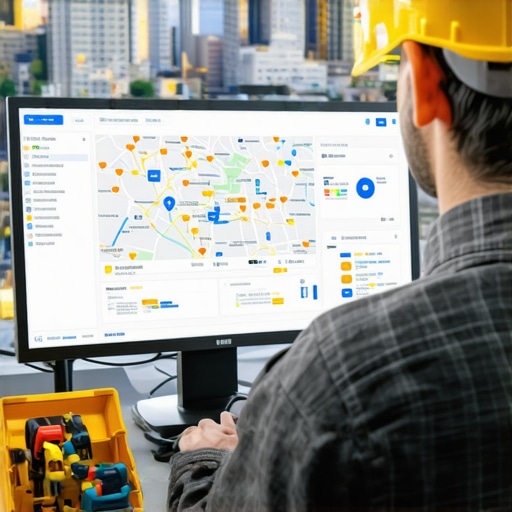
National brands often manage hundreds of locations from a centralized corporate office, leading to what we call “Neighborhood Bias” issues. They automate their updates, use generic stock photography, and fail to engage with the specific community nuances that Google’s AI now recognizes. Local contractors, conversely, can use specialized local seo tools to identify exactly where their visibility drops off. If you find your rankings vanish just a few blocks away from your shop, you are likely a victim of the proximity filter. Understanding The Proximity Myth: Why You Aren’t Ranking Two Blocks Away and the Map Fix That Works is the first step in expanding your digital reach beyond your immediate doorstep.
By focusing on hyper-local relevance – such as mentioning specific neighborhoods, local landmarks, and community events in their GBP posts – local HVAC pros signal to Google that they are the most relevant choice for a specific micro-location. This is something a national call center simply cannot replicate.
3 Critical HVAC Ranking Factors Big Brands Overlook
To truly rank higher on google maps, you must look at the data points that the “big guys” overlook because they are too difficult to automate across 500 locations.
Hyper-Local Relevance and Category Granularity
Most large franchises set their primary category to “HVAC Contractor” and leave it at that. While accurate, it lacks the granularity required for modern google maps seo. Local experts who win are those who dive into secondary categories. Are you just an HVAC contractor, or are you also an “Air Conditioning Repair Service,” a “Heating Repair Service,” and a “Furnace Repair Service”? By aligning your categories with the specific seasonal search intent of your local customers, you capture a wider net of high-intent traffic. Using local seo software allows you to track which of these categories is driving the most “click-to-calls” in real-time.
The Review Velocity Engine
It is a common misconception that the business with the most reviews wins. In reality, Google prioritizes Review Velocity – the speed and consistency at which new reviews are acquired – and the sentiment within those reviews. A national brand might have 2,000 reviews, but if they haven’t received a new one in three weeks, a local contractor with 150 reviews and a steady stream of 5-star ratings from the last 48 hours will often outrank them. Furthermore, the way you respond matters. We recommend using The Review Response Formula We Use to Build Trust and Rank Higher, which involves incorporating local keywords and service-specific terms into your replies to further boost relevance.
Real-World Attribution & Interaction Depth
Google is increasingly moving toward “Interaction Depth” as a primary ranking signal. This refers to how long a user engages with your profile before making a decision. Do they scroll through your photos? Do they read your latest GBP post? Do they use the “Request a Quote” button? Big brands often have sterile profiles that discourage interaction. Local contractors who post “behind the scenes” photos of their team at work or provide helpful maintenance tips via GBP posts create a “sticky” profile. This high engagement signals to Google that your business is a high-quality result, helping you improve google maps ranking naturally over time. Many pros are now turning to a professional google maps ranking service to manage these interactions at scale.
Advanced Technical Tactics for 2026 Domination
As we look toward 2026, the landscape of google business profile ranking is becoming increasingly technical. We are moving away from simple keyword placement and toward “Proximity Mesh” and “Local Semantic Density.” This involves ensuring that your business’s digital footprint is so tightly woven into the local web that Google cannot ignore your authority.
One of the most potent tactics involves “Visual Search.” Google’s AI can now “read” images to understand context. If you upload a photo of an AC installation and the metadata (or the visual context) confirms it was taken in a specific neighborhood, Google associates your business with that location. This is why we advocate for The Image Metadata Tactic That Actually Pushes You to the Top of the Local Pack. While national brands use the same five stock photos for every location, the local contractor who uploads ten original, geo-relevant photos a week is building a massive competitive advantage.
Additionally, google maps seo in 2026 will rely heavily on how well your website communicates with your map pin. You cannot treat them as separate entities. Implementing The Schema Code Snippet That Finally Connects Your Website to Your Map Pin ensures that every bit of authority your website gains through blogging or backlinks is directly funneled into your Google Business Profile. This creates a feedback loop that makes your profile nearly impossible to dislodge from the top spot.
Case Study: From Referrals to a Digital Lead Engine
Consider the case of a family-owned HVAC business in a competitive suburban market. For decades, they relied on word-of-mouth and a few golden-page ads. When a $120M national franchise moved into their territory, their lead flow dried up almost overnight. The franchise was outspending them 10-to-1 on PPC.
Instead of trying to win a bidding war, the local contractor invested in a specialized gmb ranking service. They focused on three things:
- Fixing “Hidden Address” errors that were confusing the algorithm.
- Increasing their review velocity using an automated SMS system.
- Publishing daily GBP posts showcasing their work in specific zip codes.
Within six months, they weren’t just competing; they were outranking the national brand in the Local 3-Pack for high-value terms like “emergency AC repair.” Because they appeared in the map pack (which users trust more than ads), their cost-per-lead dropped by 60%, and their “click-to-call” volume tripled. They proved that being “small but smart” is the ultimate advantage in local search.
Your HVAC Local SEO Checklist for 2026
To increase google business profile visibility and ensure you are capturing the maximum amount of google maps lead generation, follow this essential checklist:
- Primary & Secondary Categories: Audit your categories. Ensure you aren’t just using “HVAC Contractor” but are also targeting specific services like “Air Conditioning Installation.”
- NAP Consistency: Ensure your Name, Address, and Phone number are identical across the web. However, remember that Why perfect NAP consistency isn’t enough to outrank your closest neighbor – it’s just the baseline.
- Local Schema: Deploy advanced LocalBusiness Schema on your website. Use How We Used Advanced Local Schema to Outrank National Brands in Local Search as your guide.
- Interaction Depth: Enable the “Messages” feature and the “Request a Quote” button to encourage user engagement directly on the profile.
- Map Embeds: Use The map embed technique that actually signals authority to local algorithms on your “Contact Us” and “Service Area” pages.
- The X-Factor: Consistently perform The Specific Checklist Step That Actually Moves Your Google Profile Up, which involves auditing your “Attributes” (e.g., “Black-owned,” “Veteran-led,” “Emergency Services”) to match local search filters.
Conclusion: Taking Back Your Local Market
The era of national brands dominating local search through sheer budget is coming to an end. Google’s algorithm is becoming more sophisticated, favoring businesses that provide genuine, local value and high levels of engagement. As Faisal Rehman emphasizes, “Interaction Depth – how long and how meaningfully a user engages with your profile – is becoming a primary ranking signal for 2026.”
Local HVAC contractors have a unique advantage: they are actually in the community. By taking the time to implement professional google business profile optimization, you can turn your small business into a digital powerhouse that outranks even the largest competitors. Don’t let your leads go to a national call center. Audit your profile today, focus on your hyper-local signals, and use SEO Viper Tools to track your climb to the top of the map pack. The local market belongs to those who show up – digitally and physically.