
7 Checklist Items Contractors Miss That Kill Local Lead Generation
7 Checklist Items Contractors Miss That Kill Local Lead Generation
The “Invisible Contractor” Trap: Why Your Profile Isn’t Ringing
You’ve done everything the “gurus” told you to do. You claimed your listing, you added your phone number, you uploaded a few photos of your truck, and you’ve even managed to badger a few dozen customers into leaving five-star reviews. Yet, when you check the Map Pack, there you are – stuck at position #4 or #5. You are the “Invisible Contractor.” You are close enough to see the success of your competitors but far enough away that the phone stays silent. It’s a frustrating plateau that costs home service businesses thousands in lost revenue every single month.
The hard truth is that the basic google business profile seo tactics that worked in 2022 are now the bare minimum. In the current landscape, Google’s algorithm has evolved far beyond simple keyword matching and citation counting. Today, the gap between the guy at #1 and the guy at #4 isn’t just about the number of reviews; it’s about interaction signals and signal depth. Most contractors are following a checklist that is fundamentally broken because it ignores how Google actually evaluates local authority in a post-AI search environment.
If you feel like you’re doing everything right but the metrics aren’t moving, you’re likely falling into a common trap: focusing on visibility without engagement. We see it constantly – map clicks are happening, but they aren’t converting. To understand why this happens, you need to look at Why Map Clicks Aren’t Turning Into Calls and How to Fix the Gap. In this guide, I’m going to break down the seven critical items most contractors miss – the advanced, 2026-ready strategies that will finally break that #4 ceiling and turn your profile into a lead-generation machine.
Item 1: Ignoring the “Proximity Mesh” & Neighborhood Trust Signals
One of the most common complaints I hear from roofers and HVAC technicians is: “I rank #1 when I’m standing in my office, but as soon as I drive two miles down the road, I disappear.” This is the “Proximity Myth” in action. Many contractors believe that Google draws a simple circle around their office and ranks them equally within that radius. In reality, Google uses what I call a “Proximity Mesh.”
The Proximity Mesh is a complex web of neighborhood-level trust signals. Google evaluates your authority not just as a business in a city, but as a service provider within specific micro-neighborhoods. If all your reviews, photos, and website content mention the broad city name but ignore the specific subdivisions and districts where you actually work, Google lacks the confidence to rank you there. You are suffering from “Neighborhood Bias,” where the algorithm favors a smaller, hyper-local competitor because they have more “on-the-ground” signals in that specific area.
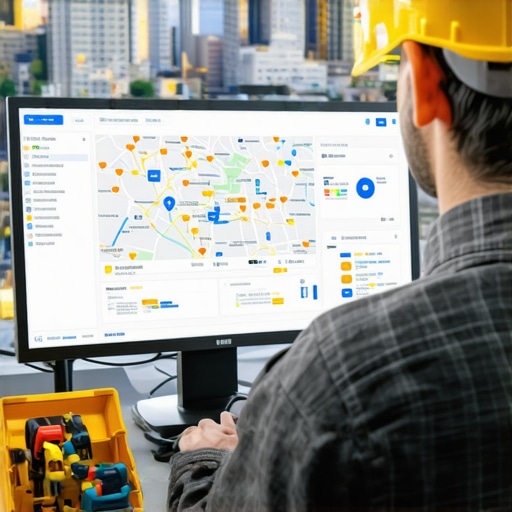
To fix this, you must stop treating your service area as a monolith. You need to use advanced local seo tools to track your rankings on a geo-grid. This allows you to see exactly where your “authority leak” is happening. Once you identify the dead zones, you can begin deploying neighborhood-specific content and localized project updates to stitch your mesh back together. For a deeper dive into this phenomenon, read my breakdown on The Proximity Myth: Why You Aren’t Ranking Two Blocks Away and the Map Fix That Works. Don’t let a two-mile gap kill your lead flow.
Item 2: Interaction Depth vs. Simple Clicks
By 2026, Google’s algorithm has moved almost entirely toward “Interaction Depth.” In the past, a simple click on your profile was a strong enough signal to suggest relevance. Today, a click is just the beginning. Google is now measuring what happens *after* the click. Do users stay on your profile? Do they scroll through your photos? Do they read the Q&A section? Most importantly, do they engage with your “Request a Quote” button or click to call?
This is where “Click-to-Call Velocity” comes into play. Google tracks how quickly and frequently users transition from viewing your profile to initiating a direct action. If a hundred people click your listing but only two call, Google views your profile as low-utility. Conversely, if you have high engagement – meaning users spend time interacting with your posts and viewing your “before and after” galleries – you will rank higher on google maps regardless of your distance from the searcher.
To master interaction depth, you must treat your Google Business Profile (GBP) like a high-converting landing page. You need compelling “Call to Action” (CTA) buttons in your posts and a meticulously organized photo gallery that encourages “dwell time.” If your profile is a ghost town of static information, Google will pass you over for a competitor who provides a more interactive experience. The goal isn’t just to be seen; it’s to be used.
Item 3: The Review Sentiment Trap & Hyper-Local Keywords
Most contractors are obsessed with the quantity of reviews. They think that hitting 100 or 500 reviews is the finish line. It isn’t. In fact, many businesses with 500 reviews are being outranked by competitors with 50. Why? Because of the Review Sentiment Trap. Google’s Natural Language Processing (NLP) AI is now sophisticated enough to read and understand the *context* of your reviews.
A review that says “Great job, thanks!” is nearly worthless for SEO. However, a review that says, “The best emergency plumber in North Dallas who fixed my burst pipe in the Preston Hollow neighborhood,” is pure gold. These are “Hyper-Local Sentiment Signals.” When your customers use specific service keywords combined with specific neighborhood names, it tells Google exactly what you do and where you are a trusted authority. This is the Specific Move That Breaks the #4 Map Pack Ceiling.
You need a “Review Response Formula” that encourages this. Don’t just say “Thanks for the review.” Instead, respond with: “It was a pleasure helping you with your AC repair in [Neighborhood Name]! We take pride in being the go-to HVAC contractor for the [Specific Area] community.” This reinforces the semantic connection between your business and the location. For more on this, see The Review Sentiment Trap: How Specific Words in Responses Actually Move Your Map Pin.
Item 4: Visual Search & Image Metadata Errors
Visual search is no longer a futuristic concept; it is a primary way Google understands your business today. When you upload a photo, Google isn’t just looking at a file; it’s using AI to “see” the objects, text, and even the location context within the image. The biggest mistake contractors make is using generic stock photos or low-quality, context-free images. This is a massive missed opportunity for improve local search presence.
Every photo you upload should be a “Signal Carrier.” This involves the “Image Metadata Tactic.” While Google has stated they don’t use EXIF data as a direct ranking factor, they absolutely use the visual context to categorize your business. If you are a landscaper, your photos should clearly show recognizable local landmarks, your branded truck, and specific equipment. This creates a “Visual Proof” of your service area.
Furthermore, you need to implement 5 new user photo tactics. Encourage your customers to upload their own photos of the finished job. User-generated content (UGC) carries significantly more weight than owner-uploaded photos because it acts as a third-party verification of your work. If your profile lacks “In-the-Wild” photos from customers, you are failing the visual search test. Stop using stock photos of smiling actors holding wrenches – Google knows they aren’t real, and so do your customers.
Item 5: Point-of-Interest (POI) Signal Alignment
Google understands the world through entities and landmarks. If your business is located near a major Point of Interest (POI) – like a stadium, a famous park, or a massive shopping mall – you can leverage that landmark’s authority to boost your own. Most contractors completely ignore POI signal alignment, missing out on a powerful way to anchor their business in a specific geographic area.
POI alignment is about telling Google, “I am a part of this specific ecosystem.” This can be achieved by mentioning your proximity to these landmarks in your GBP descriptions, your posts, and even your website’s “Areas Served” pages. When Google sees your business consistently associated with a high-traffic, high-authority POI, it increases your relevance for searches in that entire vicinity. This is one of the 3 Tested Point-of-Interest Signal Fixes to Rank Higher in 2026.
Think of it as “Geographic Association.” If you’re a roofer in Green Bay, being “two blocks from Lambeau Field” is a much stronger signal than just being “in Green Bay.” It provides a fixed coordinate that the algorithm can use to verify your physical presence. By aligning your digital signals with physical landmarks, you create a “triangulation” effect that makes your ranking much more stable and resistant to algorithm updates.
Item 6: The Schema Code Gap (Connecting Site to Pin)
There is often a massive disconnect between a contractor’s website and their Google Business Profile. They treat them as two separate islands. This “Schema Code Gap” is a silent killer of rankings. To dominate the Map Pack, you need a technical bridge that connects your website’s local authority directly to your Map Pin. This is achieved through advanced “LocalBusiness” Schema markup.
You shouldn’t just use basic Schema; you need to implement “Identity Graphing.” This involves using specific code snippets that tell Google your website (the “Entity”) is the exact same entity as your Google Business Profile. You do this by using the `sameAs` attribute in your JSON-LD Schema, linking to your GBP CID URL and your social profiles. This creates a unified “Identity Graph” that prevents Google from being confused about your business data. Using the right GBP ranking tools can help you generate this complex code without errors.
Additionally, you need to focus on “Local Semantic Density.” Your website content should mirror the hyper-local keywords found in your reviews and GBP posts. If your website only talks about “Plumbing Services” but your GBP is getting signals for “Drain Cleaning in Highland Park,” the disconnect will prevent you from reaching #1. The website and the profile must speak the same language to maximize your local authority.
Item 7: Future-Proofing for AI Discovery & Autonomous Vehicles
As we move toward 2026, the way people find contractors is shifting from traditional search to “AI Discovery.” Tools like Google’s Search Generative Experience (SGE) and AI Overviews are now the primary way users get recommendations. Furthermore, autonomous vehicle navigation systems are becoming “local search engines” in their own right. If your business isn’t optimized for these “Autonomous Maps,” you won’t exist in the future of local commerce.
To stay relevant, you must focus on “Direct Booking Signals.” AI systems prefer businesses that allow for frictionless transactions. If you have integrated booking software directly into your GBP, you are much more likely to be cited in a “Local AI Overview.” These systems look for structured data and real-time availability to provide the best answer to a user’s prompt. You can learn more about this in my guide: How to Get Cited in Local AI Overviews [2026 Checklist].
The key to future-proofing is becoming an “Authoritative Entity” rather than just a “Listed Business.” This means having a consistent presence across the web where AI can find and verify your data. Perfect NAP (Name, Address, Phone) consistency isn’t enough anymore – you need “Signal Depth” that proves you are a real, active, and trusted service provider in the physical world. If you’ve ever faced a suspension, you know how fragile this can be; always have a 3-Step Appeal Strategy ready to protect your digital asset.
Conclusion: Audit Your Way to the Top
Dominating the local Map Pack isn’t about luck, and it’s certainly not about just “being there.” It’s about meticulously checking the boxes that your competitors are too lazy to touch. From mastering the Proximity Mesh to closing the Schema Code Gap, these seven items represent the difference between a struggling business and a market leader. Don’t let your lead generation die at position #4. Take control of your google business profile seo today. Use a professional google maps rank tracker to see where you stand, or contact me, Aaron C., to build a custom strategy that puts your business where it belongs: at the very top.