
The map embed technique that actually signals authority to local algorithms
The Map Embed Technique That Actually Signals Authority to Local Algorithms
In the world of local search, there is a pervasive myth that simply copying and pasting an iframe code from Google Maps onto your “Contact Us” page is a ranking factor. I’ve spent over a decade auditing thousands of profiles, and I can tell you definitively: for google business profile seo, a standard iframe is no longer enough. In fact, most of what people call “map embeds” are nothing more than visual fluff that provides zero algorithmic weight. To truly move the needle in the local pack, you need to transition from “showing a location” to “signaling authority.” This requires a shift toward Authority Signaling – a method that validates your business entity within Google’s Knowledge Graph. If you’ve been struggling to break into the top three, it’s likely because you’re following outdated advice. Before we dive into the technical execution, you should understand The Proximity Myth: Why You Aren’t Ranking Two Blocks Away and the Map Fix That Works, which sets the stage for why directional signals are the new gold standard.
Why Most Map Embeds are Just “Visual Fluff”
If you frequent SEO subreddits or Facebook groups like “Google Business Profile Community,” you’ll see a never-ending debate. One side swears that map embeds are the secret sauce; the other claims they do absolutely nothing. In my experience, both sides are partially right because they are talking about two different things. A static iframe of a map pin is a “dumb” element. It’s a window into Google Maps, but it doesn’t necessarily pass entity equity back to your website or vice versa.
What the algorithm is actually looking for is relevance, distance, and prominence. According to Google’s own documentation on local ranking, they source information from across the web to determine a business’s position in the local ecosystem. A basic map embed fails to provide the “Prominence” signal because it lacks context. It doesn’t tell Google how a user gets to you; it only tells them where you are. In a world where every competitor has a map on their site, the “where” is a baseline, not a competitive advantage. To gain an edge, you need sophisticated local seo tools that help you look beyond the surface level of your profile.
Testing reveals that Google’s local algorithm treats a website and a Google Business Profile (GBP) as two halves of a whole. If the map on your site is just a static image or a generic pin, you aren’t creating a “Semantic Bridge.” You’re missing the opportunity to prove to the algorithm that your physical location is a high-traffic, high-authority destination within your city. This is where most “set it and forget it” agencies fail their clients.
The “Directional Embed” Breakthrough
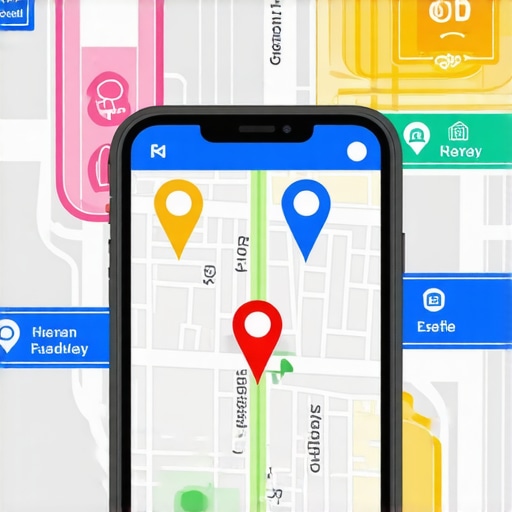
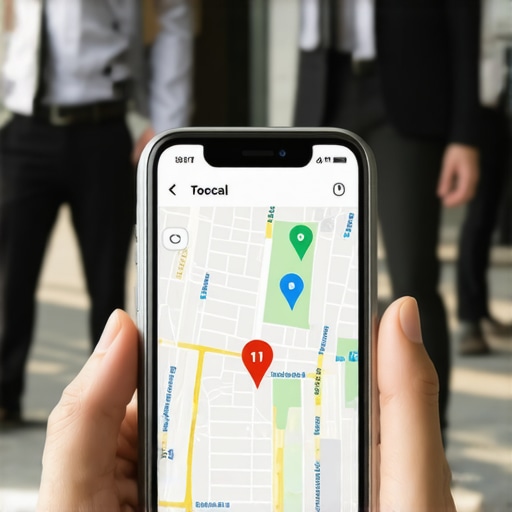
The real breakthrough in local map pack strategy – popularized by experts like Chris Palmer and confirmed through my own rigorous testing – is the “Directional Embed.” Instead of embedding a simple pin of your business, you embed a direction route from a local landmark, a major highway intersection, or a neighboring suburb directly to your business front door.
Why does this work? It creates what we call a “Geo-Entity” connection. When you embed directions, the underlying code contains much more than just coordinates. It includes transit data, travel times, and spatial relationships between your business and recognized “Points of Interest” (POIs). It tells Google not just where you are, but how the local community interacts with your location. You are essentially “teaching” the algorithm the path of least resistance for a customer to find you. This is a massive signal for google business profile seo because it feeds the “Distance” and “Relevance” pillars simultaneously.
Imagine you are a personal injury lawyer in downtown Chicago. A standard map embed shows your office. A directional embed shows the route from Millennium Park to your office. By doing this, you are semantically linking your business entity to one of the most high-authority geographic entities in the city. Google sees this relationship and begins to associate your “Prominence” with the prominence of the landmark. This is a core component of How Real Customer Interactions Signal Authority to the Google Map Algorithm. By forcing the algorithm to calculate a “Geo-Path,” you are strengthening your entity’s footprint in that specific sub-locality.
Bridging the Gap with Advanced Local Schema
The directional embed is the external signal, but your website’s code must be the internal anchor. This is where advanced JSON-LD (JavaScript Object Notation for Linked Data) comes into play. Most SEOs use basic `LocalBusiness` schema, but they fail to link it directly to the Google Maps CID (Cluster ID).
Technical analysis of Universal Search results shows that Google prefers JSON-LD over Microdata because of its superior server-side rendering capabilities. To truly rank google business profile assets, your schema must use the `hasMap` and `sameAs` properties. The `hasMap` property should not just point to a general Google Maps URL; it should point to the specific CID URL of your business. Furthermore, using the `sameAs` property to link to your GBP, your Yelp profile, and your official social media channels creates an “Entity Loop” that makes it impossible for Google to mistake who you are and what you do.
Reference Alhena.ai’s research on “Entity Linking,” which highlights that the more “sameAs” nodes you can verify, the higher your “Trust Score” within the local algorithm. When a searcher looks for a google maps ranking service, Google isn’t just looking for keywords; it’s looking for a verified, authoritative entity. By connecting your website’s schema directly to the Map CID, you are giving Google a direct roadmap to your authority. You can find the specific code requirements in our guide on The Schema Code Snippet That Finally Connects Your Website to Your Map Pin.
The 2026 Local Algorithm Shift: Beyond Proximity
As we look toward the future, specifically google maps seo 2026, the algorithm is shifting from “Physical Proximity” to “Proximity Mesh” and “Interaction Depth.” In the past, being the closest business to the searcher was often enough to win. However, Google is increasingly prioritizing businesses that have “Semantic Density” – meaning businesses that are talked about, linked to, and navigated to more frequently than others in the same radius.
To rank google business profile listings in 2026, you must focus on “User-Verified Activity.” This means the algorithm will look at how many people are actually clicking “Directions” on your map embed and following through with the trip. This is why the directional embed is so potent; it encourages real-world interaction data. We are moving into an era of “Multi-Modal Search Intent,” where Google uses AI to predict which business a user is most likely to visit based on historical traffic patterns and entity strength. If you want to stay ahead, you need to understand How Multi-Modal Search Intent Drives GMB Domination in 2026. The businesses that dominate will be those that treat their map presence as an interactive tool rather than a static billboard.
Implementation Checklist for High-Value Niches
Not all niches are created equal in the eyes of the local algorithm. Depending on your industry, your map embed strategy should shift to match user behavior. If you are struggling with low visibility, a professional gmb ranking service can help tailor these tactics to your specific market.
- Contractors and Plumbers: Since you often go to the customer, your “Service Area” is your primary concern. Instead of a single point-to-point directional embed, create multiple embeds on different city-specific landing pages. Each embed should show a route from a major local hardware store or a supply house to a central point in that specific suburb. This signals that you are active and mobile within that specific service area. Check out Why Most Plumbers Get Buried on Page 2 and the Specific GMB Fix That Saves Them for more details.
- Lawyers and Dentists: These are “Destination Businesses.” Your focus should be on “Point of Interest” (POI) directional embeds. Create routes from the nearest courthouse, major hospital, or public transit hub. This signals to Google that you are a primary destination for people already at these high-authority locations.
- Retail and Restaurants: Focus on “Cross-Shopping” embeds. Show directions from a popular nearby shopping mall or a complementary business (e.g., a movie theater if you are a restaurant). This builds a semantic association between your business and the existing foot traffic of the area.
Regardless of your niche, using the right google maps seo tools is essential for tracking how these changes affect your “Heatmap” rankings over time. Don’t just implement and hope; measure the expansion of your ranking radius.
Conclusion: Moving from Visibility to Domination
Building authority in the local map pack is no longer about “tricking” the algorithm with keyword stuffing or fake reviews. It is about technical precision and signaling real-world relevance. By moving away from “visual fluff” and implementing directional embeds and advanced JSON-LD schema, you are providing Google with the high-fidelity data it craves. Authority is built through these small, technical wins that aggregate into a dominant local presence.
If you’re ready to stop guessing and start ranking, click here to explore how SEO Viper Tools can automate your google business profile optimization and help you reclaim your spot at the top of the local pack.