Why Most Local SEO Software Gives You Useless Data About Your Map Rank
Why Most Local SEO Software Gives You Useless Data About Your Map Rank
You open your monthly SEO report and see a sea of green. Your primary keyword is sitting at “Rank #1.” You should be ecstatic. But then you look at your CRM and your phone logs. The leads aren’t there. The phone isn’t ringing like a “Rank #1” business should. This discrepancy is the single most common frustration for business owners asking, “Why is my google business profile not ranking?”
The truth is, your profile might be ranking – but only for the software, not for your customers. The “Rank #1” status provided by legacy local SEO software is often a localized illusion. A famous live test conducted at the Pizza Expo in Las Vegas proved this point definitively: a business could track as the top result on a standard rank tracker, while searchers standing just three aisles over in the same convention center saw a completely different set of results. Traditional tracking is an outdated way to measure performance in an ecosystem that changes every few hundred feet.
To understand how to truly The Hidden Logic Behind Why Your Map Clicks Never Become Phone Calls, you must first accept that the data you’ve been relying on is likely fundamentally flawed. This post will deconstruct the technical failures of common SEO tools and show you the path to high-resolution data that actually correlates with revenue.
The Fatal Flaw of Single-Point Tracking
Most legacy local seo software and gmb seo tools operate on a “single-point” tracking methodology. They ping Google’s servers from a fixed IP address or a static set of GPS coordinates, usually tied to the geographic center of a zip code or a city. While this worked in 2012, it is a catastrophic failure in the current Google Maps environment.
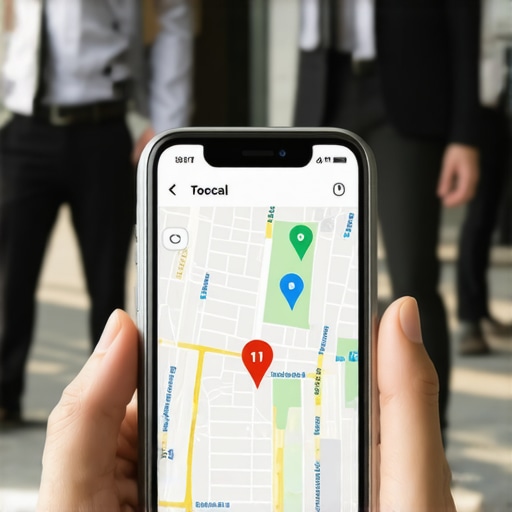
Google Maps results are hyper-local. They don’t just change from city to city; they change from block to block. A plumber might be the #1 result when a searcher is standing in their own driveway, but if that searcher moves two blocks south, that same plumber might drop to #8. If your software only checks from the center of the zip code, and your office is located there, you will always see a “Rank #1” result, even if you are invisible to 90% of the city.
To see the true landscape, you need a google maps rank tracker that utilizes geo-grids rather than single-point pings. Without this, you are flying blind. You might spend thousands on google business profile seo based on a report that only represents a 50-foot radius around your office. This is why many contractors feel they are doing everything right but still see their competitors taking the lion’s share of the calls. You aren’t just trying to rank google business profile for a keyword; you are trying to rank it for a specific geographic “mesh.”
Furthermore, many tools use desktop-based IP addresses to simulate mobile searches. Google knows the difference. A desktop search in a browser uses a different set of ranking signals than a mobile device with active GPS. If your software isn’t mimicking the mobile environment accurately, the data is essentially white noise. This is a primary reason for the mismatch between software data and real-world search results. Understanding Why Your Business Only Shows Up on Maps When Customers Are Standing Next Door is the first step to fixing the proximity gap.
Proximity, the “Possum” Update, and the Proximity Mesh
In 2016, Google rolled out the “Possum” update, which significantly changed how the local map pack seo functioned. One of the biggest takeaways from Possum was the intensification of the proximity filter. Google began filtering out businesses that were physically close to each other or that fell just outside the technical city limits, even if they had a better “Prominence” score.
The core of Google’s local algorithm rests on three pillars: Proximity, Relevance, and Prominence. Among these, Proximity is the most volatile and the hardest to “game.” You can’t easily change where your office is located, but you can change how Google perceives your authority within a specific “Proximity Mesh.”
The Proximity Mesh is the area surrounding your business where your authority is strong enough to overcome the physical distance from the searcher. When you ask, “why is my google business profile not ranking,” the answer is often that your proximity mesh is too small. You have high relevance (your categories are correct) and high prominence (you have good reviews), but your “authority signal” isn’t strong enough to reach three miles away.
Legacy tools fail to map this mesh. They give you a binary “Yes/No” or a single number. Modern strategies focus on expanding this mesh by building localized relevance. This involves more than just keywords; it involves proving to Google that you serve the specific neighborhoods where you are currently invisible. For a deeper dive into this, read about The Proximity Myth: Why You Aren’t Ranking Two Blocks Away and the Map Fix That Works.
Why Heatmaps (Grid Tracking) Are the Only Data That Matters
If single-point tracking is a thermometer, geo-grid tracking is a Doppler radar. To truly understand your google map pack ranking factors, you must visualize your data across a coordinate-based geo-grid. This is where local seo ranking tools that offer heatmaps become indispensable.
A geo-grid tracker places “pins” across your entire service area – say, a 5×5 mile grid with pins every half-mile. It then checks your rank at every single one of those pins. The result is a heatmap where you might see “1s” near your office, but “10s” and “15s” just a few miles away. This visualization reveals “blind spots” where your competitors are winning despite having fewer reviews or worse websites.
Using GBP ranking tools that provide this level of granularity allows you to stop guessing. If you see a cluster of red (low ranking) in a high-value neighborhood, you know exactly where to focus your local link-building and geo-specific content efforts. Traditional software would just tell you that your “average rank” is 4.5, which is a meaningless metric. An average rank of 4.5 could mean you are #1 in half the city and #8 in the other half, or it could mean you are #4 everywhere. Those two scenarios require completely different SEO strategies.
Without a heatmap, you are likely missing critical ranking blocks. This is detailed further in our guide on Why Your Audit Tool Misses These 3 Critical Local Ranking Blocks. By shifting to grid-based data, you move from vanity metrics to actionable intelligence.
The “Personalization Trap”: Why Your Search Results Differ from Your Clients’
One of the most common complaints I hear as a Local SEO Expert is: “I searched for my business on my phone and I’m #1, but my software says I’m #5. Why is the software lying?”
The software isn’t necessarily lying; you are caught in the “Personalization Trap.” Google’s goal is to provide the most relevant result to the user. If you are the business owner, you likely visit your own website frequently, you are logged into the Gmail account associated with the business, and you are physically located at the business address. Google’s algorithm recognizes this history and gives you a “personalized” result, showing your own business at the top because it believes that is what you want to see.
Your potential clients, however, do not have that history. They see the “cold” version of the search results. This is why your personal search is the least reliable way to check your rank. Other factors that skew results include:
- Search History: If a user has clicked on a competitor before, that competitor may rank higher for them specifically.
- Logged-in Status: Being logged into a Google account allows Google to use years of data to curate your Map Pack.
- Device-level GPS: Even a slight tilt of the phone can change the GPS coordinates enough to shift the Map Pack results.
Even VPNs and proxies often fail to replicate true local intent signals because they lack the “behavioral noise” of a real local user. This is why you might find that Why Your Business Profile Analytics Are Lying About Where Leads Come From. To get an honest look at your performance, you must use tools that can strip away personalization and simulate a “neutral” searcher at specific GPS coordinates.
Interaction Depth: The New Ranking Signal for 2026
As we look toward the future of google business profile optimization, we are seeing a shift away from traditional signals like “keywords in business name” toward more complex behavioral signals. As a Local SEO Expert, I have identified what I call “Interaction Depth” as the key ranking factor for 2026 and beyond.
Interaction Depth is a measure of how a user engages with your profile once they find it. Google is no longer just looking at the click; they are looking at what happens *after* the click. Does the user scroll through your photos? Do they spend time reading your Q&A section? Do they expand your reviews to read the full text? Most importantly, what is the “click-to-call velocity” compared to your neighbors?
If a business is ranked #1 but users consistently click on it and then immediately bounce back to the Map Pack to click on the #2 result, Google will eventually swap them. The #2 result has higher Interaction Depth and better satisfied the user’s intent. To stay ahead, you need google maps engagement tools that help you track and improve these micro-interactions.
Actionable tips for increasing Interaction Depth include:
- High-Resolution Photo Sequencing: Post photos in a way that encourages “swiping” behavior.
- Active Q&A: Seed your own questions and provide detailed, helpful answers that keep users on the profile longer.
- Review Response Depth: Don’t just say “Thanks!” Write responses that provide additional value or context, encouraging the user to keep reading.
As I always say, Interaction Depth Is the Key to Rank Higher in 2026. The businesses that focus on the user’s journey within the GMB interface will be the ones that dominate the map, regardless of proximity.
Conclusion & Action Plan: How to Actually Rank Google Business Profile
Stop trusting vanity metrics. If your local seo software is only giving you a single number for a keyword, it is giving you useless data. To truly rank in google map pack and see a real return on your investment, you must adopt a high-resolution, grid-based approach to your data.
Here is your 4-step action plan to move beyond the “Rank #1” illusion:
- Audit with Grids: Use a improve google maps rankings tool that offers geo-grid heatmaps. Identify exactly where your “authority” ends.
- Analyze the Competition: Look at the businesses winning in your “red zones.” Are they winning because of proximity, or do they have higher Interaction Depth?
- Optimize for Engagement: Don’t just “set and forget” your profile. Update photos weekly, answer questions, and respond to every review with depth.
- Expand the Mesh: Use localized content and neighborhood-specific signals to push your “green pins” further out into the surrounding areas.
The local search landscape is more competitive and more complex than ever. By understanding the flaws in traditional tracking and focusing on the proximity mesh and interaction signals, you can stop asking “why is my google business profile not ranking” and start dominating your entire market. Don’t settle for a report that looks good; demand data that reflects the reality of your customers’ screens. Start using the right google maps rank tracker today and take control of your local visibility.