Why Your Business Address Formatting Is Confusing Google
The ghost in the GPS coordinates
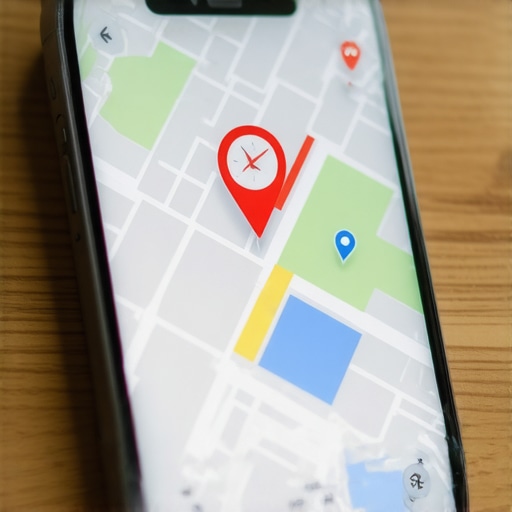
Business address formatting confuses Google when local listings use inconsistent suite numbers, non-standard street abbreviations, or mismatched postal data across citations. This creates data fragmentation, forcing the algorithm to guess which location is the authoritative source. If the mapping software sees ‘Street’ on one site and ‘St’ on another, it weakens your proximity signal and can drop you from the 3-pack.
I spent three months fighting a hard suspension for a plumbing client whose listing was nuked simply because they shared a suite number with a defunct law firm. Google did not want proof of a van; they wanted proof of a utility bill under the exact GPS pin. This is the reality of the local search ecosystem. It is a spatial database where a single comma or a misplaced hash sign can trigger a forensic audit from the spam team. I have seen businesses lose 40 percent of their call volume because they updated their office suite from ‘Suite A’ to ‘#A’ without normalizing their secondary citations. The algorithm views these as distinct entities, and in the world of local search, ambiguity is a ranking killer. If you are struggling with these issues, you might need the direct fix for businesses that lost local rankings last week to regain your footing. I remember walking the streets of downtown Chicago, smelling the wet concrete and looking at building directories, realizing that Google tries to do the same thing digitally but fails when the data is messy. You must treat your address not as a piece of mail, but as a digital fingerprint that must be identical across every server it touches.
“Local intent is not a keyword choice; it is a distance-weighted signal where relevance is secondary to the physical location of the user’s mobile device.” – Map Search Fundamental
Why your physical address is a liability
Physical addresses become liabilities when they are shared with other businesses or located in high-competition centroids where Google filters duplicate categories. If multiple businesses operate from the same building without unique identifiers, the algorithm may hide one to provide variety in the Map Pack results. This filtering process often leads to sudden ranking drops for legitimate companies.
The mathematical weight of a local review is often negated if the location data is suspect. Think about the way a logistics manager views a dispatch system. Every minute of travel time matters. Google views its map in the same way. It wants to send users to the closest, most reliable point of service. When your address is formatted poorly, the ‘flow’ of the data is interrupted. You might find that the address formatting error that keeps your business off the map is simply a matter of how the USPS database interacts with the Google Maps API. We often see cases where why address changes are the number one cause of local ranking drops boils down to a lack of historical data continuity. The system remembers where you were; if the new data does not link perfectly to the old coordinate, the trust score resets to zero. This is especially true for those seeking google business profile recovery services after a botched move. You cannot just change the text in the dashboard and expect the maps to follow immediately. There is a lag in the spatial index that requires manual verification through local signals.
The three mile radius that determines your revenue
Proximity remains the most dominant ranking factor in the local algorithm, often overriding reviews and backlinks when a user is within a three mile radius. Google calculates the distance between the user’s GPS signal and your verified pin to determine which businesses appear in the 3-pack. If your address data is non-standard, your pin might be placed incorrectly.
I have audited hundreds of profiles where the pin was actually across the street from the actual entrance. This happens because the geocoding engine could not parse a complex address string. When you use the local map pack toolkit every small shop owner needs, you begin to see how the software interprets your location. Most owners think they are ranking poorly because of a lack of reviews, but often why your low map rank is a data problem not a review problem is the real culprit. You need to understand the concept of centroid theory. Every city has a central point of commerce. If you are too far from it, or if your address makes you look like you are in a different neighborhood, your visibility vanishes. This is why the proximity myth why you aren’t ranking two blocks away is so frustrating for merchants who pay high rent for a ‘prime’ location that Google cannot properly index. You must use gmb audit and ranking toolkit methods to verify that your latitude and longitude are exact to the centimeter.
Local Authority Reading List
- How to run a GMB audit that finds errors
- Why NAP errors kill rankings
- Wiping out inconsistent data history
- Appealing a fake address suspension
- Fixing mismatched business data
Emergency seo services for sudden ranking drop
Emergency SEO services focus on identifying technical glitches such as malware, manual actions, or algorithmic filtering that cause a business to disappear from the Map Pack overnight. These services prioritize auditing the GMB dashboard and website health to restore the lost proximity signals and trust scores. Rapid recovery requires addressing both on-page and off-page data conflicts.
When a business vanishes, the owner’s first instinct is often to keyword-stuff the business name. This is a fatal error. You need local seo services to normalize rankings after keyword stuffed business name edit to clean up the mess before Google issues a permanent ban. The system is designed to catch these ‘optimization’ attempts. If you have been hit, you should look for emergency seo services for sudden ranking drop rather than trying to fix it yourself with more spam. I once saw a cafe owner lose everything because a competitor reported their address as ‘closed’ five times in one day. We had to use how we stop competitors from spamming your google business profile with fake reports to build a shield around their data. It is a war zone out there. Sometimes, the problem is not your address, but your website. I have seen that why malware on your site drops your google map pin within 48 hours is a common trigger for a ranking collapse. Google will not send customers to a location associated with a compromised digital asset.
“Local search results are based primarily on relevance, distance, and prominence. A combination of these factors helps us find the best match for your search.” – Google Business Profile Help Center
The forensic trace of a service area polygon
Service area polygons allow businesses to define where they work without showing a physical address, but inconsistent service boundaries can confuse the geographic relevance of the listing. If your website claims one service area and your GBP dashboard defines another, the algorithm restricts your reach to the smallest overlapping area. Consistency in geo-coordinates is vital for visibility.
Many businesses decide to hide their address thinking it protects their privacy. However, why hidden addresses often lead to a 50 percent drop in map clicks is a reality you must face. Google trusts physical locations more than virtual service areas. If you are a service area business, you need the tactics used to recover impressions for service area businesses to ensure you are not being filtered out. This involves using how we used advanced local schema to outrank national brands to tell the bot exactly where your technicians are located throughout the day. The ‘Check-in’ signal is a powerful metric. If a customer at a specific GPS coordinate leaves a review, it validates your presence in that zone. This is why the ranking factor most gmb experts completely ignore, which is the physical movement of your service vehicles or staff, is becoming more prominent. You must be able to prove you exist where you say you do.
Best software to rank in google maps 3 pack
The best software to rank in the Google Maps 3-pack includes tools that monitor local rank tracking, audit NAP consistency, and automate review management without triggering spam filters. These tools must provide ‘hyper-local’ data, showing rankings from specific street corners rather than just city-wide averages. Reliable software identifies the exact coordinate where your visibility fades.
Do not be fooled by ‘citation blasts.’ You should learn why buying bulk citations is still destroying your local search authority before spending a dime on automated submissions. Instead, focus on choosing a gmb toolkit that actually moves the needle for small shops. You need a platform that offers the software we use to track map pack rankings without the fluff. A good tool will show you a grid of your rankings across a five-mile radius. This allows you to see exactly where your address formatting might be causing a ‘dead zone.’ If you see a sudden drop in a specific neighborhood, it is a data problem. You might need technical seo services to fix indexing and crawling issues if your site is not communicating the correct location signals to the search engine. Remember, why buying gmb tools is a waste without this one core strategy, which is manual oversight and data cleanup. No software can fix a fundamentally broken address record without a human verifying the reality on the ground.