Why Service Area Businesses Get Suspended and How to Prevent It
The ghost in the GPS coordinates
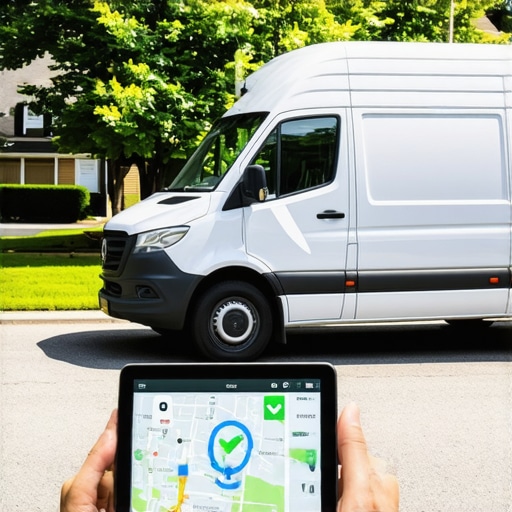
Service Area Business (SAB) suspensions happen because Google cannot verify a physical footprint through standard spatial signals. Address verification, document consistency, and proximity patterns are the essential metrics used to validate a business that does not welcome customers at its own location. These businesses exist as nodes in a dispatch system where the geographic center is often a residential home or a small shared office. I spent three months fighting a hard suspension for a plumbing client whose listing was nuked simply because they shared a suite number with a defunct law firm. Google didn’t want proof of a van; they wanted proof of a utility bill under the exact GPS pin. This struggle illustrates how the algorithm prioritizes physical logistics over simple data entry. When the search engine sees two businesses at the same coordinate with mismatched tax documents, the system triggers a default removal. Understanding why service area businesses get hit hardest by suspensions is the first step toward long term survival in the local map pack. It is not just about having a name and a phone number; it is about proving to a cold algorithm that your service trucks actually depart from the location you claim. Every piece of information must align with the forensic traces left by your real world operations.
“Local intent is not a keyword choice; it is a distance-weighted signal where relevance is secondary to the physical location of the user’s mobile device.” – Map Search Fundamental
Why your physical address is a liability
Physical addresses for SABs often lead to triggers because the algorithm assumes every business has a storefront unless told otherwise. Service area polygons, hidden address toggles, and residential zoning filters act as traps for owners who do not follow strict data protocols. Many contractors make the mistake of showing their home address because they believe it helps with trust. However, why hiding your service area address might be a massive ranking mistake is a nuanced problem that involves local trust signals and the avoidance of residential flags. Google uses street view data and municipal records to check if your listed location looks like a business. If the AI detects a porch swing instead of a warehouse bay, you are on the fast track to a manual review. This is why you must learn how to use tools to rank your google business profile without exposing yourself to unnecessary risk. The system treats every residential pin as a potential spam entry until proven legitimate. You are essentially guilty until you produce a business license or a lease agreement. The logistics of your office location matter far more than the keywords in your description. If you are struggling with a pin that vanished, our guide on what to do when your business pin disappears from google provides the immediate steps to take. Never guess with your data; use a structured approach to ensure your physical coordinates do not become your biggest weakness.
The forensic trace of a service area polygon
Service area polygons define where your business operates without a storefront, yet they are often the source of massive ranking volatility. Boundary overlap, service radius decay, and zip code saturation determine whether your profile shows up for a user five miles away or stays buried. If you set your service area too wide, Google views it as a spam signal. No local plumber services the entire state of Texas from a single house in Austin. When you claim an unrealistic territory, you invite a forensic audit. This is where the service area business guide to local map domination becomes your manual for survival. You must calibrate your reach based on where your trucks actually go. The algorithm looks for behavioral zooming signals such as location history of your fleet and reviews from customers within those specific boundaries. If all your reviews come from one city but your service area includes three counties, the mismatch will eventually cause a suspension. You should how to survive a hard gmb suspension without losing your mind because the recovery process requires surgical precision. You will need to provide photos of your branded vehicle and tools at the location. The search engine wants to see the physical gear that makes your service possible. Without this proof, your profile is just a ghost in the database. Using a google maps ranking toolkit for local businesses helps you track how your polygon actually performs in the real world.
“A business without a clear physical footprint is a statistical anomaly in a database designed to map the physical world.” – Spatial Trust Research
The three mile radius that determines your revenue
Proximity signals are the most aggressive filter in the current algorithm, often limiting your visibility to a small circle around your verification pin. Centroid bias, user distance, and signal strength dictate that your rankings will naturally drop as the searcher moves away from your base. Even the best SEO strategy cannot fully overcome the physical reality of distance. This is why businesses often see their traffic vanish after an expansion if they do not follow a specific logistics plan. If you are experiencing a sudden ranking drop, you might need emergency seo services to stabilize your profile. We often see profiles lose 50 percent of their reach simply because they toggled a setting they did not understand. For example, why hidden addresses often lead to a 50 percent drop in map clicks is a documented phenomenon in the logistics world. When the address is hidden, Google has less confidence in the proximity signal. To combat this, you must build a citation shield that reinforces your location through third party data. You should also consider investing in a gmb toolkit read this before you buy to ensure you are measuring the right distance metrics. The goal is to maximize your authority within a three mile radius before attempting to capture leads further out. The logistics of local search do not reward the greedy; they reward the relevant and the nearby.
The local SEO toolkit for Google Maps rank
Ranking toolkits provide the diagnostic data necessary to spot a suspension before it happens. NAP consistency monitors, review velocity trackers, and image metadata analyzers allow a business owner to see the health of their profile in real time. If you buy local seo tools for gmb, make sure they focus on data integrity rather than just keyword tracking. You need to know if your business name has been changed by a competitor or if your phone number is being scraped incorrectly. Using a toolkit to push local profiles into the top 3 is standard practice for veterans who do not have time to check listings manually every day. These tools also help you download gmb ranking tools for local seo that can analyze your competitors’ weaknesses. If a competitor is using a fake address, you can report them using the proper logistics framework. Many agencies offer seo services to clean up ai generated spam content penalties, which is vital if your profile was previously managed by a bot or a cheap service. Data sanitization is a manual, grinding process. You cannot automate the removal of a hard suspension. You must rebuild trust one verified data point at a time. This includes fixing fake reviews issues through a dedicated reputation management toolkit. If you want to see how the pros do it, check out our local map pack toolkit every small shop owner needs for a complete breakdown of the essential software.
Local Authority Reading List
- The Ultimate Guide to GMB Domination
- Building a Citation Shield
- The Hard Suspension Checklist
- Why SABs Get Hit Hardest
The simple fix for Google profiles with messy histories
Messy data histories act like a weight on your profile, dragging down your authority and making you a target for manual flags. Old phone numbers, previous office addresses, and abandoned social profiles create a cloud of confusion for the Google bot. If the bot sees three different versions of your business online, it chooses the most established one, which might be the wrong one. This is why fixing mismatched business data before it kills your map credibility is your top priority. You must scrub the internet of every old iteration of your brand. This forensic cleanup is the only way to ensure your profile stays active. We also suggest the simple fix for google profiles with messy opening hour histories to avoid the common trap of inconsistent availability signals. If your website says you are open 24 hours but your map profile says you close at five, the system flags you for a data mismatch. These small details are the trigger points for the spam team. They look for patterns of neglect. A profile that is updated regularly with fresh photos and accurate hours is much harder to suspend than one that has been static for two years. Use local seo services to stabilize volatile map rankings if you are moving or rebranding. The migration of data is the most dangerous time for a service area business. One wrong step in the verification loop and your lead flow will stop instantly. Always keep a paper trail of your business registrations and utility bills. When the suspension comes, and for SABs it often does, you must be ready to respond with cold, hard evidence. Stop guessing and start documenting every aspect of your physical operations.