
The Specific Data Points Your Local SEO Reports Are Probably Missing
The Specific Data Points Your Local SEO Reports Are Probably Missing
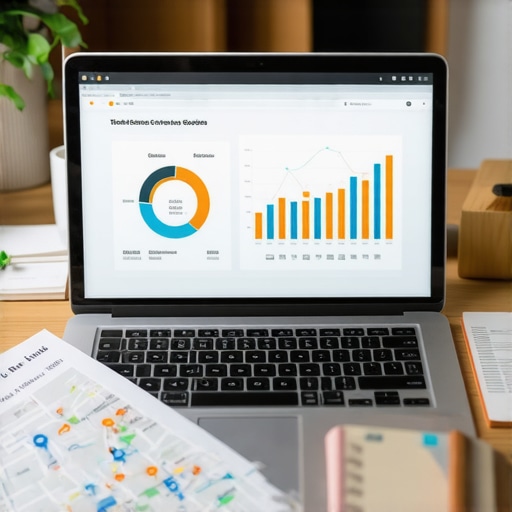
If you are a business owner in a high-stakes industry like roofing, HVAC, or legal services, you’ve likely grown accustomed to receiving a monthly PDF from your SEO provider. It usually looks great: there are green arrows pointing up, a few screenshots of “keyword rankings,” and perhaps a chart showing “total impressions.” But here is the hard truth: most of those reports are fluff. They are designed to make you feel good about your investment without actually proving a return on that investment.
As we navigate the landscape of 2026, the traditional reporting model has officially collapsed. The most significant blow came when Google discontinued its native call reporting features (a shift that sent shockwaves through the local SEO community on Reddit and beyond). For years, business owners relied on that “Call” button data to justify their marketing spend. Now, that data is gone, or at best, obfuscated. If your agency is still just reporting on “clicks to website” and “directions,” they are missing the forest for the trees.
In my experience as an expert managing local SEO for complex service industries, I’ve identified over 150 unique data points that influence a Google Business Profile’s health. Yet, the average report covers only three or four. This reporting crisis leads to a dangerous disconnect: you see “green” on your rank tracker, but your phones aren’t ringing. To understand why this happens, you first need to realize Why Your Business Profile Analytics Are Lying About Where Leads Come From.
The “Interaction Depth” Gap: Beyond the Click
In the early days of local SEO, a “click” was the ultimate metric. Today, a click is just the beginning of the story. Google’s algorithms have evolved to prioritize “Interaction Depth.” This metric measures how a user engages with your profile after they find you. Are they just looking at your phone number, or are they digging deeper?
Think about a homeowner looking for an HVAC repair service. They don’t just click the first result. They swipe through your photos to see if your trucks look professional. They check the “Services” menu to see if you handle their specific brand of furnace. They might even read the Q&A section to see how quickly you respond to customer concerns. This is Interaction Depth, and it is a massive ranking signal in 2026.
If your report isn’t tracking photo view-to-lead conversion rates or “Services” menu dwell time, you aren’t seeing the full picture. Real-world attribution and interaction signals are now more important than raw keyword density. To capture this level of detail, you need a high-performance google maps ranking service that monitors how users navigate your profile, not just how they find it. When we increase interaction depth, we send a signal to Google that your business is the most relevant and trusted solution for that searcher’s intent.
Proximity Mesh & Neighborhood Trust Signals
Most business owners are obsessed with their “ranking radius.” They want to know if they rank five miles away. However, the “Proximity Myth” suggests that ranking is a simple circle around your office. In reality, Google uses what we call a “Proximity Mesh.”
Ranking two blocks away from your office is easy; it’s practically a given. But ranking across the city – or even in the next neighborhood – requires “Neighborhood Trust Signals.” In 2026, Google’s local algorithm is hyper-focused on how your business interacts with specific geographic micro-zones. This is why a plumber might rank #1 in one neighborhood but disappear entirely three miles away in a different zip code.
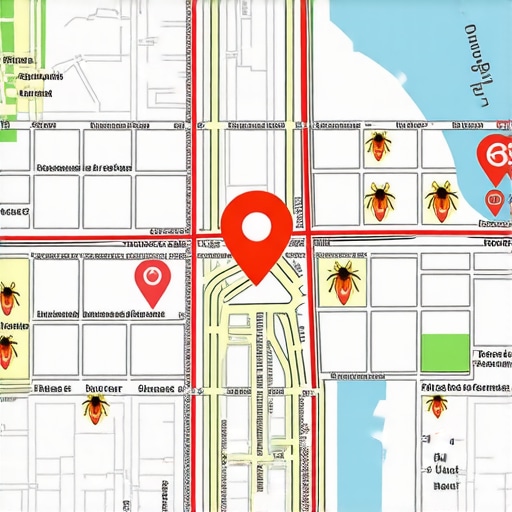
Traditional reports show you a single ranking point. A modern report should show you a heatmap of your proximity mesh. Are you gaining ground in the high-value suburbs? Are you losing visibility in the downtown core? If you aren’t seeing this data, you’re flying blind. You must Stop Ignoring Proximity Mesh: 4 Map Ranking Fixes for 2026 to ensure your visibility isn’t trapped in a tiny geographic bubble.
Technical Gaps: The Invisible Killers of Local Rankings
I often tell my clients that “Technical SEO issues are the invisible killers of local rankings.” This isn’t hyperbole. I have seen HVAC and roofing profiles with hundreds of 5-star reviews stagnate for months because of a single technical block that their “standard” audit tool missed.
One common “hidden” error is the Map Embed Error. Many businesses embed a Google Map on their contact page, but if the API key is restricted incorrectly or the CID (Contributor ID) is mismatched, it creates a break in the local “entity” connection. Another killer is image metadata. While Google claims to strip EXIF data, the initial upload stream provides context. If your images aren’t geotagged and labeled with relevant service keywords before they hit the server, you’re leaving ranking power on the table.
For service area businesses (SABs), the “hidden address” error is a frequent culprit. If your service area is defined too broadly or overlaps with a “suspended” zone in Google’s internal database, your profile will be suppressed without any notification in your dashboard. To find these issues, you need specialized local seo software that goes beyond the surface. If you feel like you’ve hit a ceiling, it’s likely because Your Audit Tool Misses These 3 Critical Local Ranking Blocks.
The 2026 Shift: AI Discovery & Visual Search Metrics
The way people search has fundamentally changed. We are no longer just in the era of “near me” searches; we are in the era of AI Discovery and Visual Search. With the rise of AI Overviews (formerly SGE), Google is now summarizing your business profile for the user. A 2026-ready local SEO report must track “AI Discovery Mentions.” How often is your business being cited as a top recommendation by Google’s AI?
Furthermore, visual search is becoming a dominant force. When a user takes a screenshot of a broken pipe and asks Google to “find someone who fixes this,” is your profile appearing? We now track “Visual Search Impressions” – how often your uploaded photos trigger a discovery through Google Lens or visual AI. This is the new frontier for google business profile seo.
We are even seeing the emergence of “Autonomous Vehicle Maps” and “AI Discovery Feeds” as critical traffic sources. If your SEO agency isn’t talking about How Multi-Modal Search Intent Drives GMB Domination in 2026, they are preparing you for a world that no longer exists.
Sentiment Analysis: Beyond the 5-Star Rating
Most reports include a “Review Summary” that shows your average rating (e.g., 4.8 stars). In 2026, this is a vanity metric. A 4.8 rating doesn’t tell Google what you are good at; it only says people like you. To rank higher, you need to understand and report on Hyper-Local Sentiment Scores.
Google’s Natural Language Processing (NLP) engine parses every review to extract “entities” and “sentiments.” If your reviews frequently mention “fast response,” “fair price,” and “professional roofing installation,” Google associates those specific semantic nodes with your business. This moves your map pin higher for those specific queries. A sophisticated google business profile audit tool will analyze your review corpus to tell you which keywords your customers are using most – and which ones your competitors are “winning” on.
Reporting on sentiment allows you to pivot your operations. If your sentiment score for “pricing” is dipping, it doesn’t just hurt your reputation – it actively pushes you down in the local map pack. Implementing Essential GMB Strategies for Local SEO Success means treating reviews as data, not just testimonials.
Conclusion: Is Your Report a Tool or a Trinket?
A local SEO report should be a roadmap for growth, not just a “pretty PDF” to justify a monthly retainer. If your current reporting doesn’t include interaction depth, proximity mesh heatmaps, technical health checks, and AI discovery metrics, then you are missing the data points that actually drive ROI.
Remember, SEO is a long-term channel. In my work with SEO Skyers, I tell every client: expect clear progress in terms of visibility and technical health within 3-6 months, and a significantly stronger ROI by the 6-12 month mark. This timeline is consistent with the latest industry research on high-competition local markets.
It is time to demand more from your data. Use professional local seo tools to audit your current performance. If you aren’t seeing the depth of data required to dominate your local market, it’s time to switch to SEO Viper Tools and start tracking what actually matters. Your business deserves more than just “green dots” – it deserves a report that translates directly into phone calls and closed contracts.
Local SEO Audit Checklist for 2026
- Does your report show Interaction Depth (photo swipes, menu clicks)?
- Are you seeing a Proximity Mesh heatmap or just a single rank point?
- Is there a monthly check for Map Embed Errors and metadata health?
- Are AI Discovery Mentions and Visual Search Impressions being tracked?
- Does your agency provide Sentiment Analysis of your review corpus?