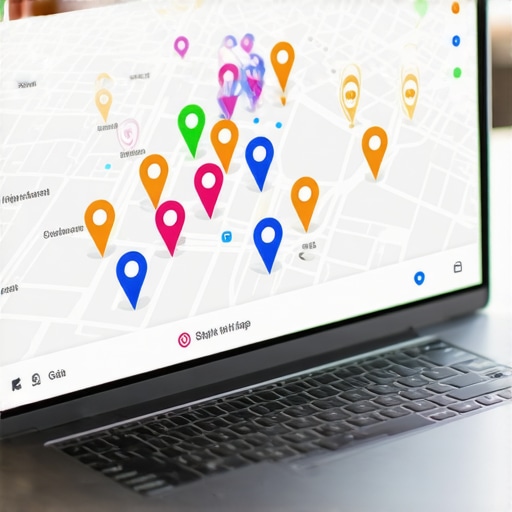
How to Connect Your Map Pin to Your Real Service Area
The ghost in the GPS coordinates
Connecting your Google Map pin to your actual service boundary requires matching physical dispatch data with your business profile. Many service businesses fail to rank because Google detects a geographic mismatch between their registered home address and where their trucks actually go. If your digital signals do not align with real-world movement patterns, search engines will suppress your Map Pack presence to protect user search quality. Real coordinates must be reinforced by consistent localized behavior, verified business documentation, and hyper-local citation signals.
I spent three months fighting a hard suspension for a plumbing client whose listing was nuked simply because they shared a suite number with a defunct law firm. Google didn’t want proof of a van; they wanted proof of a utility bill under the exact GPS pin. This battle taught me that Google views your business address as a precise spatial coordinate first and a marketing channel second. If you attempt to manipulate this relationship, the automated spam filters will trigger a partial or hard suspension. To avoid this, you need to establish a logical geographic anchor that ties directly into your actual working range.
“Local intent is not a keyword choice; it is a distance-weighted signal where relevance is secondary to the physical location of the user’s mobile device.” – Map Search Fundamentals
The three mile radius that determines your revenue
Your map listing rank decays exponentially as searchers move further from your primary physical verification node. Google calculates proximity based on the distance between the searcher and your registered location, even if you hide your address. This mathematical reality means a business operating out of a residential zone cannot realistically claim a massive fifty mile radius without triggering algorithmic filters. To expand this circle, you must use genuine geo-signals rather than purchasing fake local profiles or virtual addresses.
Understanding why your map ranking doesn’t match the physical proximity is the first step toward correcting these location boundaries. When you set a service area in your dashboard, you are only drawing a visual boundary for users. Google’s ranking algorithm looks past this cosmetic map and calculates your authority using physical coordinates. If your web assets lack localized context, the map engine will limit your visibility to a tiny radius around your verified front door.
The hidden danger of service area settings
Setting overly broad service areas without localized landing pages will cause your profile authority to dilute. Many contractors select ten different counties in their profile dashboard, believing this increases their search reach. The system detects the lack of physical authority in those distant markets and drops the business from the local pack entirely. Instead of broad selections, businesses must align their physical operational hubs with verified localized directories.
Using professional the map toolkit used by high performing local service businesses can help you see where your signals are breaking. If you switch from a physical shopfront to a service area model, you need to manage the transition carefully. Uncoordinated changes can result in a sudden drop in lead generation. This drop is usually triggered by a data conflict between what is written on your website and what is registered in your Google profile.
If you have recently updated your business details and noticed a sharp drop in calls, it is critical to find the underlying issue. Learning why your GMB call volume dropped and the fix to bring leads back is key to restoring those lost customer connections. Frequently, the issue is not a lack of interest, but a hidden address mismatch that has flagged your profile as suspicious inside the mapping database.
How to build a physical shield around your address
Consistency across external directories prevents Google from flagging your hidden physical address as a spam node. Even when you choose to hide your street address, search engines cross-reference your business name and phone number with offline records. If a secondary directory lists your old physical address, Google’s automated systems will perceive this as a data conflict. This conflict can lead to sudden, unexplained drops in search engine visibility.
To protect your digital footprint, you must systematically audit every online citation for formatting issues. Referencing the checklist for fixing a mismatched business address online will help you find and fix these hidden issues. Manual cleanups of these directories ensure that search engines always find matching data points. Clean data points allow Google to verify your real service footprint with high confidence.
Inconsistent business listings remain a major obstacle for local visibility. Discovering why NAP errors are still the number one ranking killer explains why even small formatting differences can stop your profile from climbing the ranks. Every directory must match your official registration records precisely, down to the spelling of the street name and suite number.
The local authority reading list
- Learn step-by-step recovery methods: recovering GMB visibility a step-by-step after action report
- Understand how to fix incorrect data: why your business information is still wrong after manual edits
- Fix your profile ranking issues: the map pack toolkit essential fixes for stagnant profiles
- Manage your service area updates: fixing your ranking after shifting from a shopfront to a service area model
- Discover why tools are not enough: why buying GMB tools is a waste without this one core strategy
Why customer interaction signals carry real coordinate weight
Real-world customer interaction data acts as a secondary validation layer for your business location. When clients click your listing, request directions, or upload geo-tagged photos, Google logs these data points as verification of your physical presence. Businesses that rely on stock imagery fail to generate these rich behavioral signals. Genuine visual evidence from your field team proves you are active in your claimed service areas.
Understanding the real impact of map interaction signals on your rank shows that passive listings simply cannot compete. Search engines track user engagement, including how long users view your profile photos. By encouraging customers to upload photos directly from their mobile devices at their own locations, you provide Google with genuine spatial proof of your service boundaries.
This visual evidence is crucial when competing with low-quality listings. Reading how to use real photos to beat competitors using stock images explains how original media builds trust with both algorithms and human visitors. Customer-generated content provides valuable proof that establishes your brand as an active, local entity.
How to resolve the duplicate profile threat
Duplicate listings divide your ranking power and confuse search engine crawlers trying to map your service area. If Google detects multiple profiles for a single brand at similar coordinates, it will often suppress both listings. This issue commonly occurs when business owners create new profiles after moving, rather than following the correct address migration process. To preserve your hard-earned visibility, you must merge these duplicate profiles systematically.
To fix this issue safely, follow the guide on how to safely merge duplicate google profiles without losing your local reviews. This process lets you combine your authority into a single strong listing. Consolidating your assets prevents internal competition, allowing your unified profile to rank much more effectively in your core markets.
Uncovering duplicate listings before they cause damage is essential for maintaining local search health. Knowing how to spot and fix duplicate listings before they kill your authority keeps your digital assets organized and fully compliant with Google guidelines.
The manual verification path to long-term safety
Manual citation auditing and clean updates provide a more reliable foundation than automated spam networks. While automated syndication platforms promise instant updates, they frequently leave behind broken redirects and outdated address data. Taking the time to build and verify your citations manually ensures absolute accuracy across all major mapping layers. This structured approach builds a clean data environment that protects your profile from automated flags and search penalties.
Understanding why manual citation building beats automated spam every time helps you avoid costly errors. Manual directory listings allow you to customize descriptions, verify map pin placement, and ensure that every detail aligns with your website metadata. This high attention to detail signals to search engines that your service business is legitimate, stable, and highly active within your service area.
Finally, keeping a close eye on your profile performance is the best way to maintain these gains. Following stop guessing the data points that prove your profile is improving will keep you focused on real growth metrics. Tracking map impressions and customer engagement helps you refine your local search strategy and dominate your service area for years to come.