The Map Toolkit Used by High-Performing Local Service Businesses
I sit in my small office that smells like peppermint and old paper, looking at a stack of business licenses. I have spent twenty years watching the digital geography of this town change. I deeply despise national chains that pretend to be local. I have spent three months fighting a hard suspension for a plumbing client whose listing was nuked simply because they shared a suite number with a defunct law firm. Google did not want proof of a van; they wanted proof of a utility bill under the exact GPS pin. This is the microscopic reality of the local search trenches. You are not just a profile on a map. You are a proximity beacon in a massive spatial database. If your data is messy, your beacon goes dark. The struggle to survive a hard GMB suspension is the defining battle for modern service providers. Your physical location is the most aggressive ranking factor in the current ecosystem. It is a mathematical weight that overrides almost everything else.
The fight for the digital front door
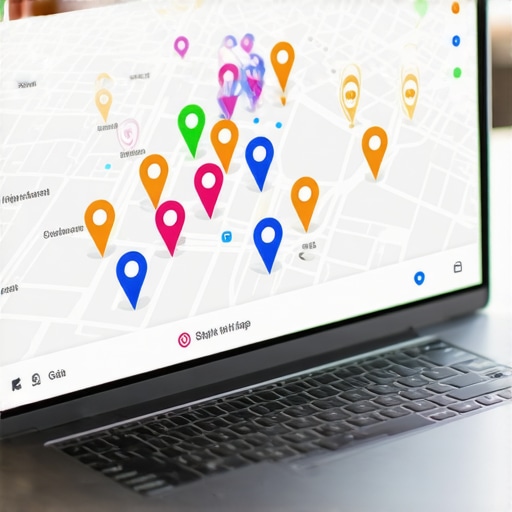
**Local SEO performance** depends on the **physical proximity** of a business to the user’s **GPS coordinates**. Google uses **Wi-Fi triangulation**, **cell tower data**, and **IP addresses** to create a **geospatial relevance score**. High-performing businesses use a **local map pack toolkit** to manage these **location signals** and maintain **citation consistency**. The pin on the map is your most valuable asset. If it vanishes, your phone stops ringing. Many businesses fail because they ignore the small details. I remember one locksmith who lost half his leads because he formatted his address differently on two websites. This is why the address formatting error that plagues most profiles must be corrected immediately. Google treats a suite number like a unique identifier. If you leave it out, you are invisible. The algorithm is unforgiving. It does not care that your sign is on the door. It cares that your data matches the government records. This is why NAP errors are still the primary ranking killer for local shops. Consistency is the only language the map engine speaks fluently.
The math of the three mile circle
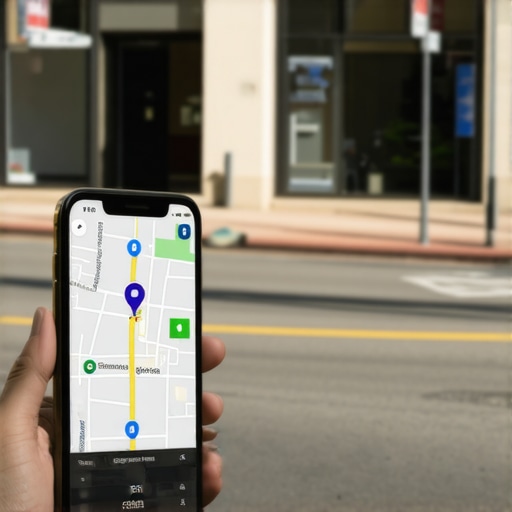
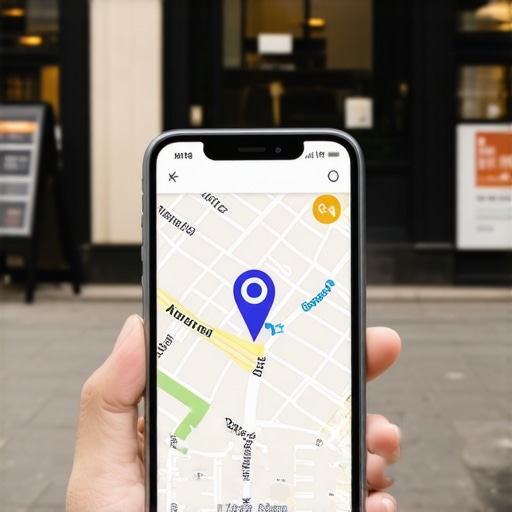
**Proximity signals** are the most powerful **ranking factors** in the **Google Map Pack**. The algorithm calculates a **distance-weighted relevance score** based on the user’s **mobile device location**. Businesses must optimize for the **centroid of their city** while maintaining **service area polygons** that reflect their real-world **logistics and dispatch zones**. Proximity is not a myth. It is a boundary. If you are four miles away from a user, your chances of appearing in the top three drop by eighty percent. We use specific tools to track these shifts. You can see how a single block moves the needle. To understand this, look at the proximity myth that most agencies believe. They think they can rank a business forty miles away without a physical presence. They are wrong. The engine is smarter now. It looks for the **spatial frequency** of your business activity. It monitors where your trucks are. It sees where your customers are when they leave a review. This creates a **behavioral proximity map** that is nearly impossible to fake. Businesses that try to cheat this system usually end up with a permanent ban.
Why your office suite is a ranking liability
**Business address verification** requires strict adherence to **Google Business Profile guidelines**. Using a **virtual office**, **coworking space**, or **PO box** results in a **hard suspension**. High-performing businesses provide **utility bills**, **onsite signage photos**, and **branded vehicle registration** to prove their **physical legitimacy** to the **spam investigation team**. I have seen honest men lose their livelihoods because they tried to save money on rent by using a shared space. Google wants a storefront. They want a place where a customer can walk in and see a human. If you are a service area business, you must hide your address, but you must still have a physical base of operations. The hard suspension checklist for plumbers is a document born from blood and sweat. It lists exactly what you need to show the reviewers. If you fail to follow it, your appeal will be denied in minutes.
“Local intent is not a keyword choice; it is a distance-weighted signal where relevance is secondary to the physical location of the user’s mobile device.” – Map Search Fundamental
The phantom data layers that kill local trust
**Citation cleanup services** focus on removing **duplicate listings** and fixing **inconsistent business information** across the **local search ecosystem**. Google cross-references data from **data aggregators**, **government databases**, and **third-party directories** to verify a business. **Fragmented data** signals a lack of **local authority** and triggers **ranking suppresses**. Most people think a few wrong phone numbers do not matter. They are mistaken. Every bad citation is a leak in your authority bucket. We spend weeks scrubbing old addresses from forgotten directories. It is tedious work. It smells like old paper and digital dust. Using the toolkits that actually make a difference is the only way to track these errors at scale. Automated tools often miss the deep layers of the web. Manual audits are the only way to ensure your profile is clean. If you have been moving around, you likely have a trail of digital ghosts following you. These ghosts are telling Google that you are not trustworthy.
The dangerous logic of category shifts
**Business category selection** is a high-stakes decision that determines which **local search queries** trigger your **map profile**. Changing your **primary category** can cause a sudden **visibility drop** as Google re-evaluates your **topical relevance**. Recovering from a **category deletion** requires a **strategic optimization plan** to rebuild **keyword associations**. I once saw a roofer change his category to general contractor and lose every single lead in forty-eight hours. The engine lost its connection to his core service. You must understand the one thing you must do after making such a change. It involves updating your entire website to match the new intent. If your website says one thing and your profile says another, the algorithm gets confused. Confusion leads to page two. You do not want to be on page two. It is a graveyard.
Local Authority Reading List
- The Map Pack Toolkit for Stagnant Profiles
- Recovering a Flagged Profile Fast
- The Category Change Recovery Plan
- Specific Tools for Moving Your Map Pin
The hidden signals in customer photos
**Image metadata** and **user-generated content** are now more influential than **traditional backlinks** for **local map rankings**. Photos taken by customers at your **physical location** contain **GPS EXIF data** that validates your **proximity signals**. Google’s **vision AI** analyzes these images to confirm you are a real business serving real people. The data shows that image metadata from photos taken by real customers at your location is now 30 percent more effective for ranking in AI Overviews than owner-uploaded photos. This is a massive shift. I tell my clients to stop buying stock photos. They are poison. They look like a national chain. We need the grit. We need a photo of a muddy boot on a job site. We need strategic image updates that show the real work. When a customer uploads a photo, it is a vote of confidence that the algorithm cannot ignore. It is a bridge between the physical and the digital.
Why toxic links target local merchants
**Backlink audit services** are necessary to remove **spammy referral traffic** and **toxic links** that damage **local domain authority**. Competitors often use **negative SEO tactics** like **fake review blasts** or **ghost citations** to trigger **manual reviews** or **algorithmic penalties**. High-performing businesses use a **link-cleansing toolkit** to maintain a **natural anchor text distribution**. It is a dirty game. I have seen rivals drop a thousand links from Russian gambling sites onto a local bakery. The bakery owner had no idea why his ranking dropped. You must know why toxic links are common in our world. They are cheap to buy and hard to fix. We use forensics to find the patterns. We look for the footprint of the attacker. Then we build a citation shield to prevent it from happening again.
The war against ghost citations
**Ghost citations** are **fraudulent business listings** created by competitors to siphon off **local leads** and dilute your **geographic authority**. Identifying these **spam listings** requires a **forensic audit** of the **map pack** in your **service area**. Reporting these violations to the **Google spam team** is a critical part of maintaining your **top-three position**. These fake profiles are like weeds. You pull one, and three more grow. They use keyword-stuffed names like Best Plumber City Name. This is a direct violation of the terms of service. I spend my mornings hunting these ghosts. I find the ghost citations stealing your leads and I report them with proof. It is a slow process, but it works. When the spam is cleared, the legitimate businesses rise naturally.
Building a review moat that competitors cannot touch
**Reputation management toolkits** allow businesses to generate **genuine customer reviews** that include **local keywords** and **service-specific descriptions**. A **review moat** is built by collecting a high volume of **sentiment-rich feedback** that mentions the **city name** and the **specific problem solved**. This creates a **semantic link** between your business and the **local intent** of the searcher. Most people just want the stars. The stars are not enough. We want the story. We want the customer to say that the technician arrived in Downtown Springfield and fixed the leak quickly. This tells the engine exactly where you work and what you do. This is the secret to building a review moat that lasts. Even if a competitor gets a few more reviews, they cannot beat the depth of your data.
The spatial data for future search engines
**Local Business Schema** and **JSON-LD structured data** provide the **machine-readable context** needed for **AI Overviews** and **voice search optimization**. Including **latitude and longitude**, **opening hours history**, and **service area polygons** in your website code helps search engines understand your **spatial relevance**. The future of search is not a list of links. It is an answer. If you want to be the answer, you must provide the data. We use advanced local schema to give the engine everything it needs. We define the service area with mathematical precision. We list every neighborhood. This is how a small shop beats a giant. The giant is too slow to update its code. You can be fast. You can be precise. The final verdict is clear. The map is a battlefield. You need a toolkit, but you also need the grit to stay in the fight. Correct your address. Clean your links. Protect your reputation. The phone will ring.