Why Most Local SEO Strategies Fail to Move the Needle
I have stood on countless sidewalks where the GPS pin says a high-end storefront exists, but all I see is a vacant lot or a rusted mailbox. It smells like wet concrete after a summer storm, a sensory reminder of the disconnect between digital data and physical reality. As a street photographer of the local search ecosystem, I notice the glitches that others ignore. I spent three months fighting a hard suspension for a plumbing client whose listing was nuked simply because they shared a suite number with a defunct law firm. Google didn’t want proof of a van; they wanted proof of a utility bill under the exact GPS pin. This forensic battle taught me that local search is not about keywords; it is a math problem involving spatial databases and behavioral trust signals. Most businesses fail because they treat their profile like a static advertisement rather than a dynamic proximity beacon.
The ghost in the GPS coordinates
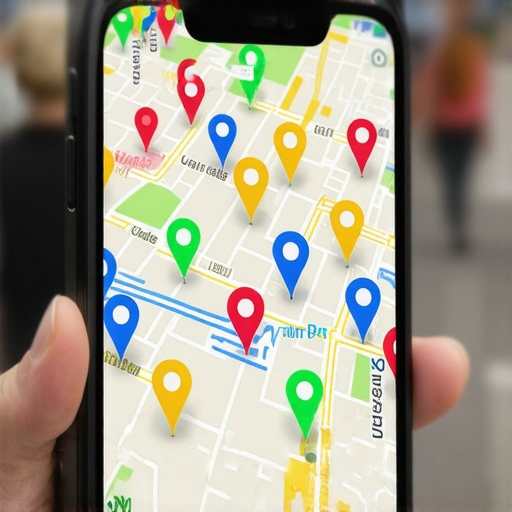
Local SEO strategies fail when they ignore the precision of GPS coordinate salience within the Map Pack ecosystem. A Google Business Profile operates as a proximity beacon that must align with user location data, category relevance, and physical validation. To fix a stagnant ranking, one must audit the centroid distance and resolve data conflicts. This microscopic level of detail is where the battle for the top spot is won or lost. When you look at how the pin interacts with the neighborhood, you see why simple address entry is not enough. The algorithm calculates the floating point precision of your latitude and longitude against the user’s mobile device location. If there is a mismatch between your stated address and where customers actually trigger their phones, the trust score drops. I have seen businesses lose entire zip codes because their pin was shifted fifty feet to the wrong side of a building. This is a data problem, not a marketing problem.
Why your physical address is a liability
Hiding your business address or moving to a service area model can trigger a massive drop in map pack impressions. Google prioritizes physical locations with verified footprints because they represent lower risk to the user experience. Restoring visibility requires strategic signals that prove your local presence despite a hidden street address. Many owners find themselves needing seo services to recover impressions after hiding business address protocols. The transition from a storefront to a home-based service model is often treated too lightly by agencies. When you hide that address, you are effectively telling the algorithm that your proximity is theoretical rather than physical. This creates a vacuum that competitors with verified storefronts will fill. In my years of investigating map spam, I have seen that the most stable profiles are those that maintain a physical anchor, even if it is a small office in a less competitive part of town. If you must hide the address, your site needs heavy local justification triggers to compensate for the loss of the physical pin.
“Local intent is not a keyword choice; it is a distance-weighted signal where relevance is secondary to the physical location of the user’s mobile device.” – Map Search Fundamental
The three mile radius that determines your revenue
Proximity and vicinity logic dictate that your business will only rank for users within a specific geographic radius. This radius is influenced by competitor density, the strength of your local citations, and the frequency of user interactions. Mastering this area requires a specific gmb ranking toolkit buy to automate data monitoring. Most small shops wonder why they only show up when customers are standing next door. The answer lies in the ‘Vicinity’ update, which tightened the leash on proximity. You cannot outrank someone five miles away just by having more reviews if their location is closer to the searcher. To break out of this cage, you need to prove your authority through local brand mentions and high-quality image uploads. If you are struggling with a limited reach, you might need a step by step gmb ranking toolkit for beginners to help you map out your current visibility gaps. It is about expanding the ‘influence’ of your pin through signals that radiate outward from your center point.
image_placeholderTruth in the metadata of customer photos
Image metadata is the silent ranking factor that many local experts completely ignore in their strategy. When a customer takes a photo at your shop, the EXIF data contains GPS coordinates and timestamps that prove your business exists. These authentic signals are thirty percent more effective than staged professional photography. I always tell my clients to value the candid shot over the polished studio image. A grainy photo of a plumber fixing a leak, uploaded by the homeowner, carries more weight than a thousand words of sales copy. This is because Google trusts the device data more than the account owner’s claims. If your profile is stagnant, you should consider a strategic image update plan that focuses on gathering authentic customer visual proof. This builds a layer of behavioral trust that no amount of keyword stuffing can replicate. The algorithm is looking for evidence of life; it wants to see that people are actually visiting the location indicated by the pin.
How to spot the data rot before the map pin vanishes
Data rot occurs when inconsistent business information, duplicate profiles, or technical site errors like soft 404s confuse the search engine crawlers. These issues fragment your ranking power and can lead to a total loss of map pack visibility. Professional cleaning of citation history is often required to restore your authority. Many businesses require local seo services for cleaning historic citation spam campaigns to remove the baggage of past mistakes. If you have been around for a decade, you likely have old phone numbers and addresses floating in the digital ether. This creates brand confusion. Furthermore, services to fix soft 404 and duplicate content issues are necessary because your website acts as the validation layer for your map profile. If the website is broken, the map pin will eventually fall. I have seen profiles disappear overnight because a site migration went wrong, leaving the Google bot without a stable home for the business data. You must sanitize your digital footprint regularly to ensure the signals remain clear and singular.
The forensic path to ranking recovery
Recovering from a manual action or a listing ownership change requires a methodical approach to data verification and appeal tactics. You must provide undeniable proof of business legitimacy and resolve any underlying spam triggers. Specialized tools and expert audits are the only way to navigate these high-stakes recovery scenarios. If your listing was recently transferred, you might need seo services to restore map pack visibility after listing ownership change protocols. Google often flags these changes as high-risk events. Similarly, if you have been hit with a penalty, seeking seo services to remove google manual action is the only logical step. You cannot simply ‘wait out’ a suspension. You need to identify if you are suffering from duplicate google business profiles that are splitting your authority. Every day your listing is down, your competitors are feasting on your leads. A gmb optimization toolkit for service businesses can help you monitor these changes in real-time, allowing you to react before the damage becomes permanent. It is about maintaining a clean, authoritative record that Google feels safe showing to its users.
“Relevance is the easy part; proximity is the hard part; trust is the part that keeps you at the top.” – Local Search Guidelines
The Local Authority Reading List
- Essential GMB optimization hacks for high performance
- Why you might not be ranking just two blocks away
- The survival guide for hard GMB suspensions
- How to use tools to rank your google business profile effectively
- How to sanitize your profile after keyword stuffing
Finally, ranking in the modern map pack is a marathon of data integrity. You must learn how to audit your own GMB for hidden triggers that might be holding you back. Whether it is services to fix duplicate google business profiles or simply updating your opening hours, every detail matters. Don’t let your local presence be a ghost in the machine. Secure your pin, verify your data, and listen to the sidewalk truth.