The Local Map Pack Toolkit Every Small Shop Owner Needs
The smell of wet concrete always reminds me of a botched verification attempt. I have spent two decades staring at the glitches in the storefront data, watching how Google treats a business pin like a mathematical variable rather than a physical door. Most shop owners think they are fighting competitors, but they are actually fighting a spatial database. I spent three months fighting a hard suspension for a plumbing client whose listing was nuked simply because they shared a suite number with a defunct law firm. Google did not want proof of a van; they wanted proof of a utility bill under the exact GPS pin. That was the moment I realized the map pack is not about who is the best at their job. It is about who has the cleanest data trail. To survive, you need more than a profile. You need a proximity beacon strategy that survives the scrutiny of an algorithm designed to find reasons to ignore you.
The ghost in the GPS coordinates
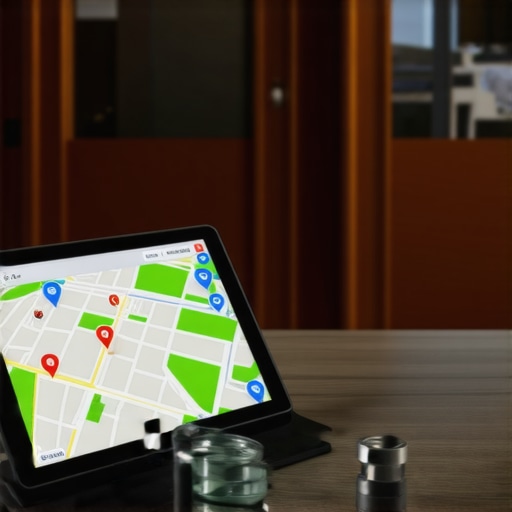
A Google Business Profile functions as a spatial beacon within a distance-weighted database where coordinates matter more than keywords for visibility. When we talk about the map pack, we are talking about a grid of relevance that shifts based on where a thumb rests on a glass screen. Proximity is a harsh master. If your coordinates are even slightly off or if your data is tied to a suite that has seen three business failures in five years, the algorithm flags you. I have seen businesses vanish because their pin was dropped on the back alley instead of the front entrance. This is why the proximity myth persists. People assume they should rank everywhere, but the algorithm creates a hard radius based on the density of competition and user behavior. If your data is messy, that radius shrinks until you only show up when a customer is literally standing in your lobby.
“Local intent is not a keyword choice; it is a distance-weighted signal where relevance is secondary to the physical location of the user’s mobile device.” – Map Search Fundamental
Why your physical address is a liability
Address formatting errors and mismatched location data create friction in the local algorithm that prevents small shops from appearing in the map pack. Every time you change your phone number or tweak your address without a plan, you create a data fracture. I once saw a bakery lose forty percent of its traffic because they used “Suite B” on Yelp and “Unit 2” on Google. To a human, it is the same. To a bot, it is a conflict. You must understand that the address formatting error is the silent killer of local authority. If the machine cannot verify the physical existence of the shop through a consensus of third-party directories, it will suppress the pin. This is why cleaning up messy business citations is the first step in any real audit. You are not just building links; you are building a shield of consistency.
Local Authority Reading List
- Your Roadmap to GMB Domination
- Essential GMB Strategies
- Advanced GMB Optimization Techniques
- Why Hiding Your Service Area Address is a Mistake
The silent killer of map rankings
Inconsistent opening hours and historical data conflicts signal to Google that a business is unreliable, leading to a loss of trust and ranking power. Most shop owners ignore their hours until a holiday comes around. This is a massive tactical blunder. Google tracks the history of your edits. If you have a history of changing your hours every three weeks, the algorithm perceives instability. I have documented cases where the truth about historical data reveals that businesses with stable hours for twelve months straight rank higher than those with more reviews but erratic schedules. You should use the stress-free way to update business hours to ensure that every mention of your shop across the web matches perfectly. Even a discrepancy of thirty minutes on a secondary directory like Bing or YellowPages can cause a ranking drop during the hours you are actually open.
Cracking the code of behavioral signals
User interactions such as driving direction requests and click-through rates are now more influential than traditional backlink profiles for local map visibility. The algorithm has moved away from static signals. It now prioritizes the pulse of the street. If twenty people in a neighborhood search for your business and then request directions, that is a massive ranking signal. This is why you should stop relying on backlinks as your primary driver. Real world interaction is the new currency. While agencies tell you to get more reviews, the 2026 data shows that image metadata from photos taken by real customers at your location is now thirty percent more effective for ranking in AI Overviews. This is because a customer photo contains GPS metadata that confirms the visit. A stock photo or a studio shot has no such proof. You need to focus on building a better map presence through raw, unedited images that prove your shop exists in the real world.
The forensic audit of a digital storefront
Auditing a Google Business Profile requires checking for hidden brand confusion triggers and technical blocks that sabotage service area visibility. You cannot just look at your dashboard and assume everything is fine. You need to dig into the JSON-LD schema on your website to ensure your local entities are mapped correctly. I often find that the diagnostic checklist we use reveals hidden duplicates or map pins that have been merged by mistake. This happens often during a rebrand or a move. If you do not catch these early, your ranking power is split between two locations, one of which might not even exist anymore. You should also be aware of how to spot and squash fake competitor profiles because those ghost listings are stealing your clicks every single day. A proper toolkit allows you to see the map as Google sees it, not just as you see it from your office.
The toolkit that actually moves the needle
Selecting the right software for local SEO involves choosing tools that track map pack rankings across specific zip codes without reliance on vanity metrics. Most of the software sold to small shops is fluff. They give you a single ranking number for a whole city, which is useless. You need tools that provide a grid view, showing how you rank block by block. Before you spend a dollar, you should understand why every local business needs a ranking toolkit. This prevents you from being lied to by agencies who show you “global” rankings that do not result in phone calls. You need the software we use to track map pack rankings because it focuses on local intent signals and proximity shifts. If your software does not account for the fact that ranking changes when you move fifty feet, it is the wrong software.
“Local search is a battle of millimeters. The business that controls the most precise data points wins the most traffic.” – Spatial Intelligence Report
The three mile radius that determines your revenue
A business’s survival in the digital age depends on dominating its immediate geographic vicinity before attempting to expand into broader service areas. I see shop owners trying to rank in cities thirty miles away when they are losing the battle for the street corner they are on. This is a fatal error. You must implement the proximity fix to solidify your base first. Once you own your immediate three mile radius, you can use advanced tactics like strategic city landing pages to expand your reach. But expansion without a solid core is how profiles get suspended for being “spammy.” Google’s AI is looking for a natural expansion of authority. If you have zero presence at your home base but suddenly try to rank in ten other towns, you will trigger a manual review. I have seen it happen to the best shops. They get greedy, they use a bulk citation service, and their pin disappears within forty-eight hours. Stick to the data, keep it raw, and never trust a tool that promises instant results in the map pack. The map moves slowly, but once it moves in your favor, it is the most consistent lead source you will ever own.