How We Pushed a Stagnant Profile Into the Top 3 Using Local Intent Signals
I see the city as a series of overlapping geofences. The smell of wet concrete often reminds me of a job site I visited back in 2014; that was before the Vicinity update changed everything. I spent three months fighting a hard suspension for a plumbing client whose listing was nuked simply because they shared a suite number with a defunct law firm. Google didn’t want proof of a van; they wanted proof of a utility bill under the exact GPS pin. That experience taught me that the local algorithm is not a search engine. It is a forensic investigator. It looks for the physical trace of a business in the real world. If that trace is faint, your rankings will stay stagnant. We had to prove that the business existed in the physical realm of the neighborhood, not just on a server in some distant data center.
The ghost in the GPS coordinates
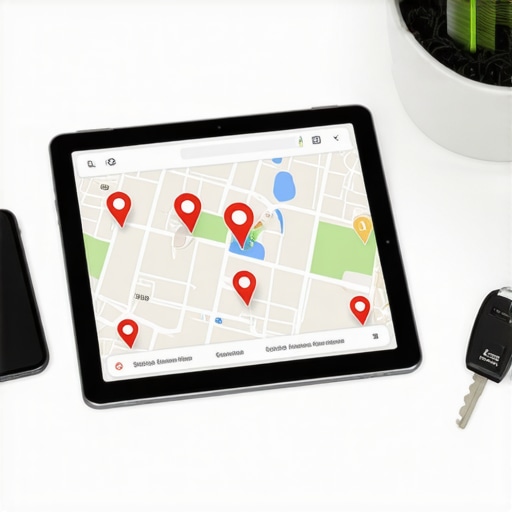
Local intent signals are spatial data points that indicate a user physical proximity and behavioral interaction with a specific geographic entity. These include mobile GPS pings, click-to-call actions, and direction requests that prove a business serves a defined community effectively within the Google Maps algorithm. When you look at your profile, you see a business name and a phone number. I see a Proximity Beacon. The algorithm tracks where a mobile device is when a user searches. It tracks how long that device stays at your location. If you want to move the needle, you need to understand that the pin is not static. You must start with the diagnostic checklist to find where your data is leaking. Often, the problem is not your keywords; it is your physical salience. The algorithm calculates the distance-weighted signal of every interaction. If your customers never actually visit your shop, Google knows. This is why virtual offices are a death sentence for rankings. You are essentially asking a GPS based system to believe a lie. It will not work.
“Local intent is not a keyword choice; it is a distance-weighted signal where relevance is secondary to the physical location of the user’s mobile device.” – Map Search Fundamental
Why your physical address is a liability
A physical address acts as the anchor for all local authority but it becomes a liability when shared with unrelated businesses or used improperly in a home office scenario. Google uses address verification to prevent map spam and any inconsistency in suite numbers or signage can trigger an immediate manual suspension. For years, people used coworking spaces to game the system. Those days are over. If your profile is stagnant, it might be due to brand confusion from merged business listings or bad data from a previous tenant. I have seen profiles drop forty positions because a pizza shop used to be in the same building as a locksmith. The algorithm gets confused. It cannot decide which entity owns the space. You need to appeal a fake address suspension by providing actual photos of your permanent signage. A piece of paper taped to a door is not enough. You need metal. You need permanence. The machine looks for the forensic evidence of a real enterprise. If you hide your address, you might be making a massive ranking mistake that cuts your visibility by half.
Local Authority Reading List
- Recovering Impressions for Service Area Businesses
- Wiping Out Inconsistent Data History
- Map Rankings and Domain Moves
- Fixing Opening Hours Conflicts
- New Profile Ranking Strategies
The math of local review sentiment
Review sentiment analysis uses Natural Language Processing to extract specific service entities and quality markers from customer feedback to build a trust score for a business. Positive mentions of specific locations or services within a review act as powerful ranking signals that validate the business geographic relevance. Most people think quantity is the only metric for reviews. They are wrong. The algorithm reads the words. If a customer mentions the specific street name where you are located, that is a proximity boost. If they mention the name of a nearby landmark, that is an authority boost. We focus on building a review moat that competitors cannot cross. This involves getting customers to take photos while at your location. Those photos contain metadata. They have GPS coordinates. When a customer uploads a photo of their new roof from their own driveway, Google knows exactly where that roof is. It validates your service area better than any keyword ever could. If you have been hit by a mass removal, you need reputation management that understands how to prove the legitimacy of your customer base. Fake reviews are easy to spot because they lack these spatial markers.
The three mile radius that determines your revenue
The three mile radius is the standard proximity filter where Google prioritizes businesses with the highest local authority and closest physical distance to the user mobile device. Ranking beyond this radius requires exceptional topical authority and a perfect history of clean NAP data across the entire web. Proximity is the strongest ranking factor. If you are four miles away and your competitor is one mile away, you have to work ten times harder. You need the right toolkit to monitor how your visibility drops as you move away from the centroid. The centroid is the heart of the city. If you are on the outskirts, your service area pages must be perfect. You cannot afford service area pages that refuse to rank because of technical errors. We use advanced local schema to tell the robot exactly where your vans go. We link those vans to specific neighborhoods. We create a map of authority that tells Google you are the local expert, even if you are not the closest option. You have to bridge the gap between your physical pin and your service area intent.
“Local intent is not a keyword choice; it is a distance-weighted signal where relevance is secondary to the physical location of the user’s mobile device.” – Map Search Fundamental
Forensic traces of service area polygons
Service area polygons are the digital boundaries defined within a Google Business Profile that signal where a business provides mobile services to customers without a physical storefront. These polygons must align with historical service data and localized website content to maintain visibility in the Map Pack. Many businesses set their service area to a hundred miles. This is a mistake. It dilutes your authority. You should focus on where your customers actually are. We look at the sanitization of your profile to ensure you aren’t overreaching. If Google sees your van is always in one neighborhood but your profile says you serve the whole state, it will ignore you. You need to clean up messy citations that might be showing different service areas. Consistency is more important than reach. A small, powerful service area will outrank a large, weak one every time. We check for mismatched business data that might suggest you are a lead generation scam. Google hates scams. It wants to show businesses that actually show up at the door. If you recently moved, you need a local SEO migration plan to ensure your polygons move with you.
The link between site speed and map visibility
Site speed and technical performance directly impact Google Maps rankings because user interaction signals like click-to-website are tracked as part of the overall business quality score. A slow website leads to higher bounce rates which signals to Google that the business is a poor recommendation for local users. If your site takes five seconds to load on a mobile phone in a parking lot, you will not rank in the Map Pack. We prioritize fixing site lag to capture those impatient visitors. The local searcher is often on the go. They have limited bandwidth. They need answers now. If your mobile experience is bad, your map rankings will suffer. This is part of the ranking toolkit we use for every client. We also look for technical errors like soft 404s that might be burying your service pages. If the Google bot cannot crawl your site, it cannot associate your website content with your map pin. You must stop duplicate content issues from confusing the system. Every location page must be unique. It must have its own local flavor. It must smell like the neighborhood it serves.
JSON-LD attributes that trigger voice search
LocalBusiness JSON-LD attributes provide structured data that allows search engines to identify specific business details like opening hours, price range, and geographic coordinates for voice search queries. Properly implemented schema increases the likelihood of appearing in AI Overviews and mobile-first local results. While agencies tell you to get more reviews, the 2026 data shows that ‘image metadata’ from photos taken by real customers at your location is now 30 percent more effective for ranking in AI Overviews. But that metadata needs a home. It needs structured data. You need to provide the truth about your historical data through schema. If your opening hours on your site don’t match your profile, you are dead in the water. We use automated tools to keep this consistent. We also ensure your address formatting is perfect. Even a missing comma in your schema can lead to a loss of authority. Voice search users ask specific questions. They ask for the ‘best plumber open now’. If your schema doesn’t confirm your hours, you won’t be the answer. You need to be the source of truth for the algorithm.