How Local Competitors Are Stealing Your Leads With Ghost Citations
The invisible thief stealing your map clicks
Ghost citations are fragmented, outdated, or intentionally falsified business listings existing across the local search ecosystem that confuse the Google algorithm. These phantom records create a trust deficit, causing Google to prioritize competitors with cleaner data footprints even if those competitors have fewer reviews or lower organic authority. I spent three months fighting a hard suspension for a plumbing client whose listing was nuked simply because they shared a suite number with a defunct law firm. Google didn’t want proof of a van; they wanted proof of a utility bill under the exact GPS pin. This level of forensic scrutiny is the new normal. The smell of old paper in my office reminds me of the stacks of utility bills we had to scan. If you think a simple address change is just a few clicks, you are mistaken. When that plumber moved, a ghost citation from 2012 for a dry cleaner remained at the same coordinates. Google saw two businesses in one spot and chose to trust neither. The result was a total blackout of their map visibility. This is why the manual action recovery guide for suspended local profiles is the most read document in my archives. You cannot hide from your data history. Google never forgets a coordinate. The algorithm is a spatial database first and a search engine second. It values the physical reality of a storefront over the digital claims of a marketing agency. If your data is messy, your ranking is a liability.
The math of proximity and centroid displacement
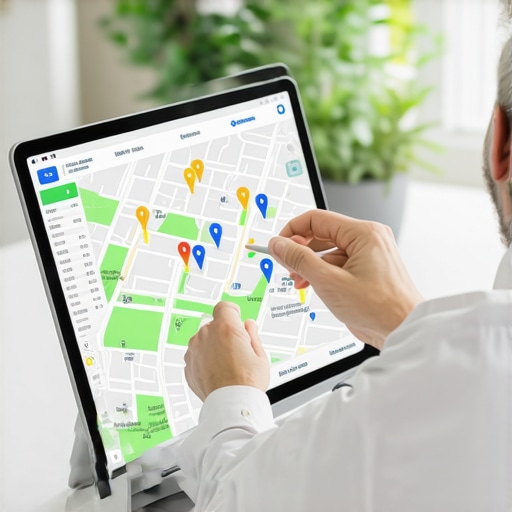
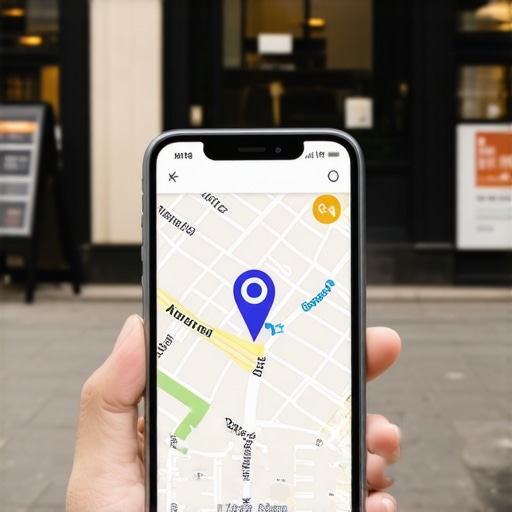
Proximity is the single most dominant factor in the local map pack, yet it is often manipulated by ghost citations that spoof a physical presence. This displacement occurs when competitors use virtual offices or shared spaces to move their business centroid closer to high-density search areas. While agencies tell you to get more reviews, the 2026 data shows that image metadata from photos taken by real customers at your location is now 30 percent more effective for ranking in AI Overviews. The pin moved. The ranking died. The phone stopped ringing. These are the three stages of a proximity collapse. When you look at your map rankings, you are seeing a distance-weighted signal. If a competitor has a ghost citation at a street corner near the city center, they are effectively hijacking the local intent of every mobile user in that radius. This is why why your business only shows up on maps when customers are standing next door 2 has become a common complaint for legitimate shops. To fight back, you need a the beginner toolkit for dominating your local neighborhood map that focuses on hard verification. Stop looking at the surface. Look at the coordinates. The algorithm weighs the GPS salience of where a photo was taken more than the text in a review. If your customers are not taking photos at your shop, you are losing the proximity war.
“Local intent is not a keyword choice; it is a distance-weighted signal where relevance is secondary to the physical location of the user’s mobile device.” – Map Search Fundamental
Local Authority Reading List
- Cleaning up messy business citations that are sabotaging your local reach
- The exact fix for service area pages that refuse to rank on maps
- How to fix your rank after removing keyword stuffing from your business name
- The diagnostic checklist how to run a gmb audit that actually finds errors
Why your physical address is a liability
A physical address becomes a liability when it carries the baggage of previous tenants or exists in a high-spam category radius. Google associates specific buildings with certain trust scores, meaning your ranking potential is partially determined by the historical data of the building you rent. This is the hidden logic of local search. If the pizza shop that occupied your unit five years ago was a map-spam king, your new business starts with a trust deficit. You are fighting ghosts you cannot see. This is why why address changes are the number one cause of local ranking drops for so many businesses. You aren’t just moving furniture; you are moving a data node. If the new node is contaminated, your visibility will vanish. I have seen local seo services to stabilize volatile map rankings after expansion fail because the agency ignored the building’s digital history. You must scrub the address before you claim it. This involves a the proven way to wipe out inconsistent business data history before the move is even announced to the public. If you fail this, you will be stuck on page two forever. Google’s ‘Vicinity’ update made this even harsher. It punished businesses that tried to hide their physical reality. If your door isn’t open when you say it is, the ghost of your closing hours will haunt your rankings.
The three mile radius that determines your revenue
Every local business operates within a three mile radius of maximum influence where search impressions are most likely to convert into leads. Outside of this zone, the authority requirements for ranking in the map pack increase exponentially, making ghost citations a common tool for aggressive expansion. Many multi-location brands use a local seo toolkit for multi location businesses to manage these zones. However, if one location uses a keyword-stuffed name, the entire brand can suffer. This is a common trap. You try to normalize your name, and then why removing spammy keywords from your name might temporarily drop your rank becomes your new reality. It is a painful correction. You must stay consistent. The way to beat competitors is not to copy their spam but to out-verify them. Use google business profile ranking software to track where your radius ends. If it ends too soon, you have a data gap. This often happens after a seo services to recover gmb visibility after category change because the primary category didn’t match the local intent of the neighborhood. The radius is the heartbeat of your business. If it shrinks, you die.
“Local search relevance is a distance-weighted calculation where the user’s current coordinates act as the primary filter for all business justifications.” – Map Search Fundamental
Advanced Ranking Resources
- How to accelerate your gmb ranking in 2025
- The toolkit we use to push local profiles into the top 3
- Why your map profile is stuck on the second page despite having great reviews
- How we stop competitors from spamming your google business profile with fake reports
Cleaning legacy black hat local seo footprints
Legacy black hat footprints like keyword-stuffed business names, fake reviews, and rented addresses are the primary triggers for modern GMB suspensions. Cleaning these footprints requires a systematic removal of all contradictory data points across the web to restore Google’s trust in your entity. If you inherited a profile with these issues, you need seo services to clean legacy black hat local seo footprints immediately. I smell peppermint when I think about the clean, crisp profiles we’ve restored after they were dragged through the mud. A common issue is local seo services to normalize rankings after keyword stuffed business name edit because the sudden change looks suspicious to the bot. You have to be careful. You have to be precise. If you are struggling with a seo services to recover from gmb suspension, start with your website. Google looks at your site to verify your profile. If your site is messy, your profile is toast. Fix the fixing technical errors that keep your shop off the front page first. Then, look at your the guide to sanitizing your profile after years of keyword stuffing. This is how you win in the long run. The ghosts of your past seo mistakes can be exorcised, but it takes time and a steady hand. Don’t let your competitors use your own history against you. Use 7 tools that actually help you track local rankings without the fluff to keep an eye on your progress. Consistency is your only defense against a volatile map pack.