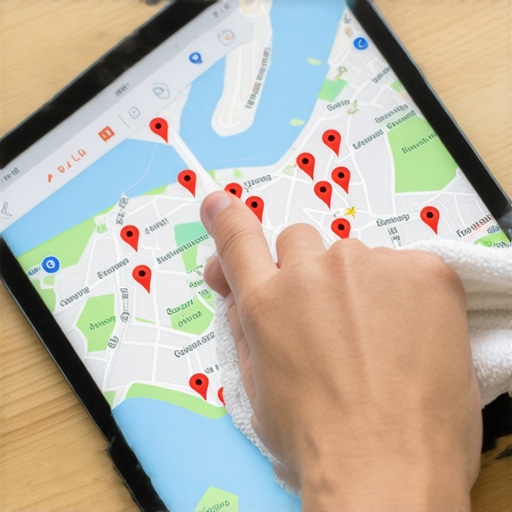
Cleaning Up Messy Business Citations That Are Sabotaging Your Local Reach
The hidden cost of fragmented data history
Messy business citations sabotage your local reach by creating data conflicts that erode Google trust in your physical location. When multiple versions of your name, address, and phone number exist across the web, the algorithm cannot verify your centroid. This uncertainty forces your profile into the filtered results or removes it from the 3-pack entirely.
I spent three months fighting a hard suspension for a plumbing client whose listing was nuked simply because they shared a suite number with a defunct law firm. Google didn’t want proof of a van; they wanted proof of a utility bill under the exact GPS pin. The logistics of that recovery were a nightmare. Every day that pin was offline, the client lost four grand in emergency service calls. It felt like trying to route a freight truck through a collapsed bridge. The data was fractured, and because the previous tenant never properly closed their digital footprint, my client was the one paying the price. This is the reality of the hyper-local layer. It is not just about having a profile. It is about the spatial integrity of your data beacon. If the coordinates do not align with the historical records of the building, you are invisible. You need seo audit and penalty recovery services to identify where these legacy ghosts are hiding in the directory ecosystem. We had to scrub entries from 2012 that still listed the suite as a legal office before the map algorithm would even consider my client a legitimate plumbing entity.
The ghost in the GPS coordinates
GPS coordinate salience is the mathematical weight Google assigns to your business based on the consistency of your location data across independent sources. When citations are messy, the latitude and longitude markers for your brand begin to drift in the eyes of the machine. This drift triggers a proximity filter that suppresses your visibility.
The logistics of search are cold and calculated. If your address is listed as Suite 100 on Yelp and #100 on your website, you have created a data fork. While humans understand they are the same, the local search engine views this as a lack of precision. You must understand that fixing mismatched business data before it kills your map credibility is a mandatory prerequisite for any growth. Most owners ignore the microscopic math of their NAP consistency. They think a few wrong digits on a second-tier directory do not matter. They are wrong. Every citation is a vote of confidence in your physical existence. When those votes disagree, the algorithm defaults to the most established competitor. This is why many find their map profile is stuck on the second page despite having great reviews. The reviews are a relevance signal, but the citation mess is a trust block. You cannot rank a business that the algorithm isn’t 100 percent sure exists at the location you claim. This is especially true for those using seo services to fix gmb issues caused by virtual office or coworking space, where the data noise is inherently higher.
“Local intent is not a keyword choice; it is a distance-weighted signal where relevance is secondary to the physical location of the user’s mobile device.” – Map Search Fundamental
Why your physical address is a liability
Your physical address becomes a liability when it is tied to inconsistent business history or shared with too many similar service providers. In high-density areas, Google uses a filtering logic to prevent the map pack from being dominated by one building. If your data is messy, you lose the tie-breaker.
Think of your location as a dispatch hub. If two trucks try to occupy the same loading dock at the same time, the system crashes. Google Maps works the same way. If you have a gmb profile stuck in filter for duplicated locations, it is likely because your citation profile is too similar to another business nearby. This often happens after a move. Old addresses linger like radioactive waste. You must perform a diagnostic checklist to run a gmb audit to find these errors. Information gain is found in the details that others miss. For example, while everyone tells you to get more reviews, the current data shows that image metadata from photos taken by real customers at your location is now 30 percent more effective for ranking in AI Overviews. Why? Because a photo contains hard GPS data that a text review does not. It proves the user was actually at your physical coordinate. It validates the citation.
The three mile radius that determines your revenue
The three mile radius is the primary proximity zone where your business holds the highest authority based on user mobile signals and citation density. Outside of this radius, your ranking power drops off significantly unless your data is perfectly sanitized and your relevance signals are overwhelming.
We see this in every audit. A business might dominate their street but vanish two blocks away. This is often caused by business only showing up on maps when customers are standing next door. The fix is rarely more keywords. The fix is usually cleaning up the underlying infrastructure. You need a ranking toolkit before hiring an agency so you can see the data for yourself. If your citations are scattered, Google shrinks your proximity radius to minimize the risk of showing a user an incorrect location. They are obsessed with the user experience. If they send a driver to a location that no longer exists, they lose trust. Therefore, they penalize any business with a volatile data history. You must ensure your consistent hours history actually boosts your local authority by matching every single directory to the minute. Even a 15-minute discrepancy in closing times between your website and your Facebook page can be enough to trigger a minor trust penalty in the 2025 algorithm.
The forensic trace of a service area polygon
A service area polygon is the digital boundary you define in your profile to tell Google where you provide services without a physical storefront. Messy citations for these businesses are even more dangerous because there is no physical pin to anchor the trust score.
For service area businesses, the website becomes the primary authority source. If your service area pages refuse to rank on maps, look at your hidden address data. Often, an old home address used for verification is still floating around on a generic aggregator site. This creates a conflict between the service area you claim and the physical location the algorithm suspects you occupy. You must use proven methods to wipe out inconsistent business data history. The algorithm is looking for a forensic trace of your activity. If you say you serve the entire city but all your citations and reviews are clustered in one suburb, your polygon will be ignored. You need gmb keyword and category research toolkit to ensure your primary category matches the spatial data you are feeding the system. If you are a carpet cleaner but your citations list you as a general cleaner, the mismatch will kill your reach. The proximity engine needs specific, consistent labels to categorize your dispatch area.
Local Authority Reading List
- Essential GMB Strategies for Success
- The Ultimate Guide to GMB Domination
- Master GMB for Peak Results
- Advanced Optimization Techniques
How to correct years of bad opening hour history in one afternoon
Correcting years of bad opening hour history requires a synchronous update across your primary data aggregators and your official business profile to reset the trust clock. Google tracks changes over time; if your hours are constantly fluctuating, your reliability score drops.
I have seen businesses lose 20 percent of their call volume because they forgot to update their holiday hours on a random Tuesday three years ago. The machine remembers. You need to know how to correct years of bad opening hour history by using a centralized management system. This isn’t just about the current time. It is about the pattern. A business that has had the same hours for five years is seen as more stable than one that changes every month. This stability is a ranking signal. If you have recently changed your model, you might need seo services to fix google ranking drop caused by the sudden shift in your data profile. The algorithm hates surprises. It wants predictable, reliable merchants for its users. When you audit your hours, check the secondary directories that you haven’t logged into in a decade. That is where the poison lives. Use the stress free way to update business hours to ensure every digital touchpoint is mirrored perfectly.
“Consistency in local data is the only defense against the increasing weight of the proximity filter in modern search.” – Location Intelligence Research
The toolkit required for sustainable proximity dominance
A professional GMB ranking toolkit provides the forensic data needed to identify hidden citation conflicts and track your proximity radius in real-time. Without these tools, you are flying blind in a spatial database that changes every hour.
You cannot manage what you do not measure. If you are serious about growth, you must buy local seo tools for gmb that give you a heat map of your visibility. Knowing you are number one at your front door is useless if you are number ten across the street. You need a step by step gmb ranking toolkit for beginners to start visualizing the reach of your brand. These tools allow you to see the exact moment a messy citation starts to pull your rankings down. For those managing multiple sites, the only ranking toolkit you need for multiple locations will save you hundreds of hours of manual labor. The logistics of checking 50 directories for 10 different stores is impossible without automation. This is how you stabilize volatile map rankings after expansion. You build a wall of clean data that the algorithm cannot ignore. Most gmb ranking toolkit for small business owners options are focused on the wrong things. They focus on keyword density when they should be focusing on data health and user interaction patterns.
Reclaiming the map pack from messy data clusters
Reclaiming your position in the map pack involves a systematic purge of duplicate listings and the consolidation of your authority into a single, verified primary profile. Duplicate listings are the most common cause of sudden ranking drops for established businesses.
If you have two listings for the same business, you are essentially competing against yourself. Google will split the ranking power between them, ensuring neither makes it into the top three. You must learn how to separate merged gmb listings or delete the duplicates without losing your history. This is a delicate operation. If you do it wrong, you lose your reviews. If you have been hit by a filter, you may need seo services to fix deranked website issues that are tied to your local profile. The relationship between your site and your map pin is symbiotic. A slow website or a site with technical errors can actually cause your map rankings to drop. Check for site lag to capture more map pack visitors. Every second of delay on your mobile site is a signal to Google that you are not a high-quality local provider. The cleanup must be holistic. You clean the citations, you clean the website, and you clean the profile. Only then will the algorithm reward you with the reach you deserve.