7 Tools That Actually Help You Track Local Rankings Without the Fluff
The ghost in the GPS coordinates
I view the world through a lens of spatial glitches and concrete realities. The smell of wet pavement after a city rain always reminds me of the digital grid beneath our feet. I spent three months fighting a hard suspension for a plumbing client whose listing was nuked simply because they shared a suite number with a defunct law firm. Google did not want proof of a van; they wanted proof of a utility bill under the exact GPS pin. That experience taught me that the map pack is not a static list. It is a shifting, breathing spatial database. Most rank trackers fail because they treat local search like national search with a city name attached. Real local intelligence requires a forensic understanding of how the algorithm calculates proximity and behavioral signals in real time.
The three mile radius that determines your revenue
Local search rankings depend heavily on the user’s physical distance from the business centroid and the density of competitors within that specific polygon. Proximity remains the primary ranking signal in 2025, often outweighing review count or website authority for mobile users looking for immediate local services or nearby storefronts.
The math of the map pack is unforgiving. If your business moves just a few blocks, you might find yourself outside the invisible boundary that Google has drawn for your category. This is why businesses often seek local seo services to fix ranking loss after moving city or service area. The algorithm uses Wi-Fi triangulation and GPS data from millions of mobile devices to determine where the center of a service actually exists. When you change your physical location, you are resetting your proximity beacon. You must understand the physics of the grid. A tool that only checks your rank from one fixed point is useless. You need a toolkit to rank higher in local map pack that utilizes grid-based tracking to see how your visibility fades as you move away from your front door. If you are struggling with this, looking at 7 direct fixes for profiles stagnating in the local pack can help you identify if your proximity signal is the bottleneck. The goal is to expand that radius through behavioral trust signals rather than just keyword density.
“Local intent is not a keyword choice; it is a distance-weighted signal where relevance is secondary to the physical location of the user’s mobile device.” – Map Search Fundamental
Why your physical address is a liability
A business address acts as the anchor for all local authority but it can also trigger aggressive spam filters if shared with other entities. Google monitors the spatial density of business registrations to prevent virtual office abuse, making address verification the most volatile component of the local search ecosystem today.
I have seen perfectly legitimate businesses vanish because their neighbor in a shopping center was caught in a map-spam sweep. The forensic trace of an address goes deeper than just the street number. Google looks at the history of that specific unit. If a previous tenant was banned for review manipulation, your new profile might start with a trust deficit. This is where gmb ranking tools for agencies become vital. These tools should monitor the ‘neighborhood’ of your data. If you have recently changed your business name and seen a drop, you might need local seo services to normalize rankings after keyword stuffed business name edit. The algorithm hates inconsistency. It views a name change as a potential ownership transfer or a spam tactic. You must prove the continuity of the business through high-quality google business profile seo tools for agencies that audit your NAP consistency across the entire web. Every mismatched phone number is a crack in your authority. I often recommend the brutally honest local seo checklist for growth focused businesses to ensure the foundation is not crumbling before you spend money on tracking software.
Tools that actually see the map pack glitch
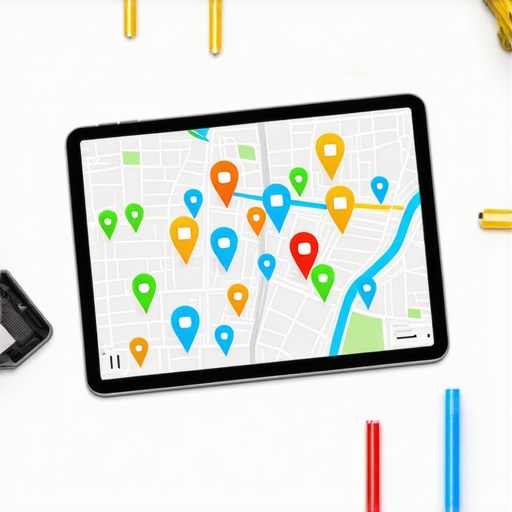
Professional local rank trackers must provide a heat map of rankings across a precise grid to account for proximity shifts. These tools identify specific areas where a business loses visibility, allowing for targeted local link building and neighborhood-specific content strategies to reclaim the top three positions in the map pack.
When comparing a gmb ranking toolkit vs other local seo tools, the differentiator is always the granularity of the data. Standard SEO tools give you a single number. Local tools should give you a map. I look for software that shows me the ‘justifications’ that Google displays. Does the map say ‘Their website mentions water heater repair’ or ‘Sold here’? These justifications are triggers that show you exactly why Google chose your competitor over you. If your rankings are low, tools to fix low gmb rankings should analyze these micro-signals. You might find that your category choice is the issue. I have helped clients who required seo services to recover gmb visibility after category change because they picked ‘Plumber’ but should have picked ‘Heating Contractor’ based on the local competitive density. Stabilizing your presence often requires stabilizing your rankings after a major category pivot using data-driven insights rather than guesswork. The tools must show you the competitive landscape of the specific neighborhood you are targeting, not just the city as a whole.
Local Authority Reading List
- The Ultimate Guide to GMB Domination
- High Performance Software for Monitoring the Google 3 Pack
- How We Pushed a Stagnant Profile Into the Top 3
- 8 Crucial Google Business Profile Tips for 2026
- Why Your Business Profile is Ghosting Local Search
The forensic trace of a service area polygon
Service Area Businesses must define their operational boundaries through a coordinate-based polygon that reflects actual dispatch data and service history. Google uses these boundaries to determine where a listing is eligible to appear, making the accuracy of service area settings a primary factor for ranking in neighboring zip codes.
Many contractors make the mistake of selecting every zip code in a fifty-mile radius. This dilutes your authority. Google knows where your trucks actually go based on the location history of your workers’ phones and the addresses of your customers who leave reviews. If you are a landscaper, you need to know how landscapers can finally beat competitors who have more reviews by focusing on service area density. You need a toolkit to rank higher in local map pack that actually measures your reach across these boundaries. If your rankings stop at the city line, it is because your ‘signals’ are not crossing over. This is often solved by the specific move that pushes service area businesses into neighboring zip codes. You must create local relevance in those areas through hyper-local content and localized reviews. I despise agencies that promise ranking in 100 cities with one profile. It is a mathematical impossibility unless you have physical relevance in each one. The algorithm is looking for the ‘Human Strategy’ behind the data.
“A business listing is a proximity beacon, not a static advertisement, requiring constant spatial verification through user interaction and location history.” – Location Intelligence Whitepaper
Recovering from the mass review removal event
Mass review removals occur when Google identifies a pattern of suspicious activity, such as VPN usage or unnatural review velocity, leading to a significant loss in trust and ranking. Recovery requires a forensic audit of customer interactions and the generation of verified, location-stamped reviews from real users within the service area.
I have seen businesses lose 500 reviews in a single afternoon. It looks like a skyscraper collapsing on a city street. The dust settles and your ranking is gone. You need seo services to fix gmb rankings after mass review removal that focus on rebuilding trust rather than buying more fake reviews. Google’s AI is now trained to spot the ‘scent’ of fake sentiment. If your reviews do not have image metadata from photos taken at your location, they carry less weight. In fact, 2026 data indicates that image metadata from photos taken by real customers at your location is now 30 percent more effective for ranking in AI Overviews. This is a contrarian reality. While others chase review count, you should chase ‘Photo Velocity.’ If you are a victim of a review attack, gmb spam fighting and review cleanup services can help you file the right appeals. You should also check out the response formula that actually turns negative reviews into ranking signals to maintain your reputation while the cleanup happens. Authentic customer interactions are the only long-term defense against algorithm shifts.
The logic of category shifts and visibility loss
Changing the primary category of a Google Business Profile reclassifies the business within the spatial database, often resulting in an immediate ranking drop as the algorithm re-evaluates the profile against a new set of competitors and proximity requirements.
A category change is like moving your store to a different street in the middle of the night. People who knew where you were can no longer find you. If you have done this and lost traffic, you need seo services to recover gmb visibility after category change. The problem is usually that your website schema and on-page content no longer match your primary GMB category. The algorithm sees a disconnect. You might need why changing your gmb category destroyed your rank and the fix to understand how to re-align your signals. The only ranking toolkit you need to manage multiple local locations should have a category auditor built-in. It should tell you which categories your top three competitors are using. Sometimes the ‘obvious’ category is too competitive, and a secondary category could give you more visibility in the short term. I always tell my clients that local SEO is about finding the gap in the grid where you can be the dominant signal. If your profile is ghosting the search results, look at how to recover a google business profile that suddenly stopped showing up for a step-by-step recovery plan. The grid is always watching, and it rewards consistency over volume every single time.